Dutch navy launches new rMCM vessel
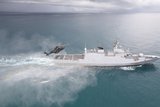
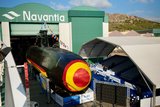
With its wide range of uncrewed systems, the new MCMVs will increase the capacity of the RNLN and Belgian Navy to locate and neutralise minefields faster than many existing ships. (Photo: Netherlands MoD)
The first new Mine Countermeasures Vessel (MCMV) for the Royal Netherlands Navy was launched in a ceremony at the Kership Joint Venture shipyard in Concarneau on 19 October 2023.


The Royal Netherlands Navy (RNLN) has announced the launch of its first of six new Mine Countermeasures Vessel (MCMV).
When commissioned in 2025, it will be named HrMs Vlissingen (M840) and is the first of six that will be delivered to the RNLN. Under the bi-national rMCM programme, another six MCMVs will also be delivered to the Belgian Navy.
The vessels will replace the RNLN’s and Belgian Navy service’s Alkmaar-class (Tripartite) MCMVs . The first new Belgian MCMV, Oostende (M940), was launched in March 2023 and will be commissioned in 2024.
The keel for the second Belgian ship, Tournai (M941), the third rMCM was
Our news & analysis is now part of Defence Insight®
A Basic-level or higher Defence Insight subscription is now required to view this content.


More from Naval Warfare
-
![Italy sets course for a decade of sustained naval investment]()
Italy sets course for a decade of sustained naval investment
The country's long-term growth plan to overhaul its fleets well into the 2030s could open the door to an array of opportunities for suppliers.
-
![FNSS looks to put uncrewed vehicles at the front of amphibious assaults]()
FNSS looks to put uncrewed vehicles at the front of amphibious assaults
The new platform is designed to put reconnaissance, obstacle clearance and fire support ahead of the crewed force in a contested landing.
-
![Ireland’s strategic cable role grows as naval capacity falls behind]()
Ireland’s strategic cable role grows as naval capacity falls behind
Around 75% of the northern hemisphere’s undersea cables transit Irish waters, but personnel shortfalls and a stalled multirole vessel programme leave patrol capacity in question.