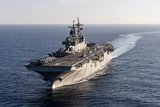
First MEKO A-200 frigate for Egypt commences sea trials
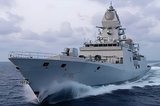
The Egyptian Navy is receiving six MEKO A-200 frigates similar to vessels provided to the South African Navy (pictured is SAS Amatola). (Photo: TKMS)
Sea trials are in progress in Germany of ENS Al-Aziz, the first of six MEKO A-200 vessels ordered by Egypt.


Sea trials are underway in Germany of the first MEKO A-200 frigate built by ThyssenKrupp Marine Systems (TKMS), Blohm+Voss and HDW for the Egyptian Navy.
ENS Al-Aziz is armed with eight MM40 Block 3 Exocet and 32 VL MICA NG missiles plus a Vulcano 127mm main gun and four 20mm cannon, as well as MU90 lightweight and DM-2A4 (SeaHake Mod 4) heavyweight torpedoes.
Thales supplied its Scorpion 2 EW jamming system and NS-110 4D AESA radar.
In April 2019, the German government approved the sale of six MEKO A-200 vessels, providing guarantees of up to €2.3 billion (US$2.5 billion).
Each of these vessels is 121m long and displaces 3,700t with a top speed of 29kt.
The first three units are being built by TKMS in Germany with the rest constructed at Alexandria Shipyards in Egypt.
TKMS is also reportedly in talks with the Egyptian government to co-produce the MEKO A-300 frigate with a shipyard in the North African country.
Related Programmes in Defence Insight
Related Equipment in Defence Insight



More from Naval Warfare
-
![Competitive P17B tender marks a shift in Indian Navy frigate procurement]()
Competitive P17B tender marks a shift in Indian Navy frigate procurement
The Indian Navy's P17B programme is expected to combine greater weapons capacity with a competitive domestic construction model, although key systems could remain dependent on international supply chains.
-
![How France’s SNLE 3G programme is reshaping the naval nuclear industrial base]()
How France’s SNLE 3G programme is reshaping the naval nuclear industrial base
Extending far beyond a four-submarine replacement programme, France’s ballistic missile submarine effort is a decades-long industrial initiative designed to preserve the country’s ability to build and sustain nuclear-powered strategic platforms.
-
![Quantum Systems enters maritime domain with Baltic-focused USV and UUV]()
Quantum Systems enters maritime domain with Baltic-focused USV and UUV
Quantum Systems has launched into the maritime domain with Seavex and Subvex, aiming to close a Baltic Sea ISR gap opened by infrastructure sabotage.
-
![Suppliers await next step in Australia’s mine warfare transition]()
Suppliers await next step in Australia’s mine warfare transition
Australia’s mine countermeasure capability remains in flux as the Huon-class nears retirement, but accelerated investment in autonomous systems is opening a path for industry.
-
![Can the US Navy ask Indo-Pacific allies to do more while training with them less?]()
Can the US Navy ask Indo-Pacific allies to do more while training with them less?
As the Iran War draws US ships and marine corps units away from the Indo-Pacific, curtailed exercises and a temporary carrier gap are exposing tensions between Washington’s demand for more self-reliant allies and the joint training needed to realise that ambition.