EVADER offers training capability against anti-ship missiles
Australian company creates air-launched over-the-horizon training missile


Victoria-based Grollo Aerospace has developed a low-cost supersonic training missile called EVADER, to help Royal Australian Navy (RAN) personnel practice against a high-speed target.
EVADER is 4.2m long and weighs about 90kg. It features a supersonic ramjet engine in a rugged airframe with an autonomous control system developed by Grollo Aerospace.
In July, the company submitted a proposal for an A$2.85 million Defence Innovation Hub contract that would complete development of the training missile, as well as ‘help protect RAN ships and personnel and open up a hitherto-untapped global market for high-speed aerial training targets’, the company noted in a 31 October statement.
Currently, the RAN simulates missile attacks by flying crewed or unmanned aircraft towards them or even firing artillery shells near vessels, but neither method is particularly realistic.
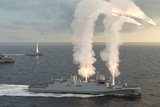
As EVADER is air-launched from over the horizon, it ‘can accurately replicate the flight path and trajectory of a genuine, sea-skimming anti-ship missile, including some terminal manoeuvres’, Grollo argued, claiming: ‘Its training value for ships’ combat systems and their operators in realistically simulating such threats is incalculable.’
As part of our promise to deliver comprehensive coverage to our Defence Insight and Premium News subscribers, our curated defence news content provides the latest industry updates, contract awards and programme milestones.


More from Naval Warfare
-
![How France’s SNLE 3G programme is reshaping the naval nuclear industrial base]()
How France’s SNLE 3G programme is reshaping the naval nuclear industrial base
Extending far beyond a four-submarine replacement programme, France’s ballistic missile submarine effort is a decades-long industrial initiative designed to preserve the country’s ability to build and sustain nuclear-powered strategic platforms.
-
![Quantum Systems enters maritime domain with Baltic-focused USV and UUV]()
Quantum Systems enters maritime domain with Baltic-focused USV and UUV
Quantum Systems has launched into the maritime domain with Seavex and Subvex, aiming to close a Baltic Sea ISR gap opened by infrastructure sabotage.
-
![Suppliers await next step in Australia’s mine warfare transition]()
Suppliers await next step in Australia’s mine warfare transition
Australia’s mine countermeasure capability remains in flux as the Huon-class nears retirement, but accelerated investment in autonomous systems is opening a path for industry.
-
![Can the US Navy ask Indo-Pacific allies to do more while training with them less?]()
Can the US Navy ask Indo-Pacific allies to do more while training with them less?
As the Iran War draws US ships and marine corps units away from the Indo-Pacific, curtailed exercises and a temporary carrier gap are exposing tensions between Washington’s demand for more self-reliant allies and the joint training needed to realise that ambition.
-
![How could Rheinmetall’s GMF 140 fit with ongoing programmes in North America?]()
How could Rheinmetall’s GMF 140 fit with ongoing programmes in North America?
With Canada committed to its River-class replacement and the USN pursuing a lower-cost frigate, Rheinmetall will need to demonstrate where the GMF 140 can fill a capability gap in the North American fleet.