Euronaval: SIMBAD-RC enters qualification phase


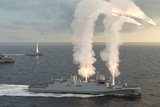
MBDA is on track to begin deliveries of SIMBAD-RC ship self-defence system production units in 2015, with the system now undergoing qualification testing.
The SIMBAD-RC is a ‘remote controlled’ variant of the SIMBAD twin launcher system, equipped with two ready-to-fire Mistral missiles, in service with the French Navy and with several navies around the world.
MBDA began development of SIMBAD-RC in 2011 as the main air defence system for fast patrol boats and auxiliary ships, or as a complementary air defence system for corvettes and frigates.
The system, which provides vessel self-protection against a wide range of threats ranging from anti-ship missiles to fast in-shore attack craft, is mounted on a stabilised launcher and remotely controlled from the ship’s operations room, where a single operator can control two SIMBAD-RC launcher systems.
SIMBAD-RC incorporates a 4th Generation IR thermal sight, enabling passive detection and identification of targets at long range. The system has been ordered by two unnamed navies.
Antoine Bouvier, CEO, MBDA, said: ‘The SIMBAD-RC programme is a perfect example of MBDA’s strategy aimed at developing land and naval systems at the cutting edge of technology, systems that correspond perfectly to the operational requirements of our customers while at the same time maximising the efficiency of our missiles. The commercial success of this nascent programme serves as a welcome confirmation of this strategy.’
Commonalities with the previous SIMBAD system infrastructure will allow customers to upgrade to the SIMBAD-RC standard.


More from Naval Warfare
-
![Suppliers await next step in Australia’s mine warfare transition]()
Suppliers await next step in Australia’s mine warfare transition
Australia’s mine countermeasure capability remains in flux as the Huon-class nears retirement, but accelerated investment in autonomous systems is opening a path for industry.
-
![Can the US Navy ask Indo-Pacific allies to do more while training with them less?]()
Can the US Navy ask Indo-Pacific allies to do more while training with them less?
As the Iran War draws US ships and marine corps units away from the Indo-Pacific, curtailed exercises and a temporary carrier gap are exposing tensions between Washington’s demand for more self-reliant allies and the joint training needed to realise that ambition.
-
![How could Rheinmetall’s GMF 140 fit with ongoing programmes in North America?]()
How could Rheinmetall’s GMF 140 fit with ongoing programmes in North America?
With Canada committed to its River-class replacement and the USN pursuing a lower-cost frigate, Rheinmetall will need to demonstrate where the GMF 140 can fill a capability gap in the North American fleet.
-
![Australian industry programme builds pipeline for Virginia-class sustainment]()
Australian industry programme builds pipeline for Virginia-class sustainment
Australian businesses can now bid to support Virginia-class submarine sustainment in Western Australia, as momentum around the Henderson Defence Precinct also builds.
-
![South Korea, Japan and Turkey vie for US shipbuilding access in future frigate contest]()
South Korea, Japan and Turkey vie for US shipbuilding access in future frigate contest
Washington’s search for a foreign-built frigate could hand South Korea, Japan and Turkey a larger prize than a double-hull order: a foothold inside the US shipbuilding industrial base.