Entire Black Sea “a contested maritime area”, says Commander of Estonian Navy
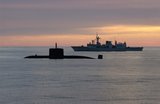
Can Ukraine stand against the Russian fleet? (Photo: Russian Defence Ministry)
The use of uncrewed vessels and vehicles has been crucial so far, but the Commander of the Estonian Navy warns against inflating their importance.


Commodore Ivo Värk, Commander of the Estonian Navy, has said that the entire Black Sea is currently a contested naval area, with neither Russia nor Ukraine able to claim dominance in the conventional sense of naval warfare.
Speaking to Russian newspaper Pravda, frequently a voice of government spin, Commodore Värk said that assets and territory in the Black Sea were frequently changing hands.
“Today, both sides effectively have a certain degree of freedom of action,” Värk explained. “This freedom of action is, of course, greater near the coastline, where both sides have their own air defence systems, naval mines and
Our news & analysis is now part of Defence Insight®
A Basic-level or higher Defence Insight subscription is now required to view this content.




More from Naval Warfare
-
![Canada’s submarine availability under pressure as Chicoutimi is unlikely to return to front-line duties]()
Canada’s submarine availability under pressure as Chicoutimi is unlikely to return to front-line duties
HMCS Victoria and HMCS Windsor could return from their current deep maintenance, but unconfirmed operational timelines leave questions over patrol capacity before the first CPSP arrives.
-
![Patrol vessel demand and partnerships anchor North Africa’s naval market]()
Patrol vessel demand and partnerships anchor North Africa’s naval market
Fincantieri and Naval Group are positioning for long-term work in Egypt and Morocco as demand for local industrial partnerships grows.
-
![Poland’s naval modernisation plans point to $13 billion market]()
Poland’s naval modernisation plans point to $13 billion market
Poland is reshaping its naval capabilities through investments in surface and undersea fleets, with further procurement opportunities expected into the 2030s.
-
![Autonomy gives Turkey a chance to outflank established naval shipbuilders]()
Autonomy gives Turkey a chance to outflank established naval shipbuilders
Turkish shipbuilders have sold ships from Asia to Europe, but autonomy and swarm technology could give them a fairer fight against Western European rivals.
-
![France’s naval modernisation drives opportunities for European defence industry]()
France’s naval modernisation drives opportunities for European defence industry
Ahead of Euronaval 2026, major submarine, frigate and aircraft carrier programmes are driving investment, while future corvette replacements and growing interest in uncrewed vessels offer further opportunities for industry into the 2030s and beyond.