Enhancements for Canadian Coast Guard
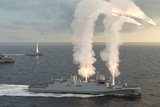
The Canadian government announced significant enhancements to the Canadian Coast Guard (CCG) resources in Vancouver Harbour on 23 July 2015.
The enhancements include further support from Canadian armed forces and the Department of National Defence to the CCG Inshore Rescue Boat (IRB) station in order to boost response capabilities for search and rescue operations.
The IRB station operates out of the HMCS Discovery facility of the Royal Canadian Navy. A new CCG environmental response office will be set up at the facility as part of the coordination between the CCG and navy. In addition, a CCG pollution response vessel will be docked at the facility as the base of operations in response to marine pollution incidents in the Vancouver Harbour area.
The number of naval reservists at HMCS Discovery will be increased to support the IRM programme as required, and more personnel at HMCS Discovery will be recruited for training for search and rescue operations. Moreover, a fourth rigid-hulled inflatable boat will be added to the fleet used to support HMCS Discovery operations.
In addition, the Department of National Defence will improve existing HMCS Discovery facilities.
Kerry-Lynne Findlay, Minister of National Revenue and Member of Parliament for Delta-Richmond East, said: ‘Today, we are taking steps to enhance our readiness and capacity in Vancouver Harbour. I would like to thank the Department of National Defence and the Canadian armed forces for their support to this Inshore Rescue Boat station and their continued collaboration with the Canadian Coast Guard in keeping British Columbia’s waters safe and clean.’



You may also like
More from Naval Warfare
-
![China’s mineral processing dominance exposes naval supply chain vulnerabilities]()
China’s mineral processing dominance exposes naval supply chain vulnerabilities
Competition for critical minerals, and China’s dominance of their processing, is emerging as a decisive factor in future naval procurement programmes.
-
![Suppliers await next step in Australia’s mine warfare transition]()
Suppliers await next step in Australia’s mine warfare transition
Australia’s mine countermeasure capability remains in flux as the Huon-class nears retirement, but accelerated investment in autonomous systems is opening a path for industry.
-
![Can the US Navy ask Indo-Pacific allies to do more while training with them less?]()
Can the US Navy ask Indo-Pacific allies to do more while training with them less?
As the Iran War draws US ships and marine corps units away from the Indo-Pacific, curtailed exercises and a temporary carrier gap are exposing tensions between Washington’s demand for more self-reliant allies and the joint training needed to realise that ambition.
-
![How could Rheinmetall’s GMF 140 fit with ongoing programmes in North America?]()
How could Rheinmetall’s GMF 140 fit with ongoing programmes in North America?
With Canada committed to its River-class replacement and the USN pursuing a lower-cost frigate, Rheinmetall will need to demonstrate where the GMF 140 can fill a capability gap in the North American fleet.
-
![Australian industry programme builds pipeline for Virginia-class sustainment]()
Australian industry programme builds pipeline for Virginia-class sustainment
Australian businesses can now bid to support Virginia-class submarine sustainment in Western Australia, as momentum around the Henderson Defence Precinct also builds.