CASG acknowledges Hunter-class build challenges


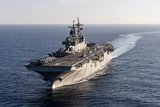
As the Royal Australian Navy looks ahead to acquiring Hunter-class frigates, RADM Anthony Dalton, General Manager of Ships at Australia’s Capability Acquisition and Sustainment Group (CASG), acknowledged the challenges ahead.
When building the three-ship Hobart-class Air Warfare Destroyers (AWD), Dalton said that ASC Shipyard in Osborne, South Australia was basically a consolidation yard, ‘which is very different for what we’re going to need for the Hunter-class frigate’.
‘Hunter class will be built in a single shipyard so we need a more vertically integrated shipyard, and that’s the work that’s happening at Osborne
Our news & analysis is now part of Defence Insight®
A Basic-level or higher Defence Insight subscription is now required to view this content.



More from Naval Warfare
-
![Can the US Navy ask Indo-Pacific allies to do more while training with them less?]()
Can the US Navy ask Indo-Pacific allies to do more while training with them less?
As the Iran War draws US ships and marine corps units away from the Indo-Pacific, curtailed exercises and a temporary carrier gap are exposing tensions between Washington’s demand for more self-reliant allies and the joint training needed to realise that ambition.
-
![How could Rheinmetall’s GMF 140 fit with ongoing programmes in North America?]()
How could Rheinmetall’s GMF 140 fit with ongoing programmes in North America?
With Canada committed to its River-class replacement and the USN pursuing a lower-cost frigate, Rheinmetall will need to demonstrate where the GMF 140 can fill a capability gap in the North American fleet.
-
![Australian industry programme builds pipeline for Virginia-class sustainment]()
Australian industry programme builds pipeline for Virginia-class sustainment
Australian businesses can now bid to support Virginia-class submarine sustainment in Western Australia, as momentum around the Henderson Defence Precinct also builds.
-
![South Korea, Japan and Turkey vie for US shipbuilding access in future frigate contest]()
South Korea, Japan and Turkey vie for US shipbuilding access in future frigate contest
Washington’s search for a foreign-built frigate could hand South Korea, Japan and Turkey a larger prize than a double-hull order: a foothold inside the US shipbuilding industrial base.