UK’s Fleet Solid Support ship programme deemed on track despite steel supply concerns
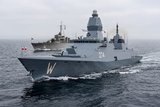
Navantia UK, BMT and Harland & Wolff are the consortium working on the Fleet Solid Support ship programme. (Image: Navantia)
Shipbuilders are saying the programme is going ahead on time as the government estimates 7.7 million tonnes of steel are needed for 2026 infrastructure projects.


The UK Royal Navy’s Fleet Solid Support (FSS) ships programme will not face setbacks as a result of problems at Liberty Steel’s Dalzell plant, according to comments from defence minister Luke Pollard.
In a written response to an MP’s question on 22 January, Pollard said: “The current assessment of the potential impact of raw material shortage [at the plant] on the construction of the three Fleet Solid Support ships for the Royal Fleet Auxiliary is considered to be low.”
Speaking to Shephard, Ben Murray, chief of staff for Navantia UK – which is building the vessel as part of a consortium –
Our news & analysis is now part of Defence Insight®
A Basic-level or higher Defence Insight subscription is now required to view this content.



More from Naval Warfare
-
![All eyes on Royal Navy’s Type 93 market engagement as industry prepares bids]()
All eyes on Royal Navy’s Type 93 market engagement as industry prepares bids
Responses are due by 29 October as the Royal Navy tests the market, with BAE Systems’ Herne and MSubs’ Excalibur setting up a contest where payloads may decide the winner.
-
![US Navy’s MQ-25 Stingray approaches carrier-integration tests]()
US Navy’s MQ-25 Stingray approaches carrier-integration tests
Boeing has outlined its upcoming precision-landing and carrier-airspace trials as MQ-25 manufacturing shifts towards Illinois, with initial Lot 1 deliveries expected in 2029.
-
![From Poland to the Pacific: can Miecznik become a blueprint for other navies?]()
From Poland to the Pacific: can Miecznik become a blueprint for other navies?
Babcock is taking its Polish industrial partnership approach to Denmark and New Zealand as navies seek sovereign shipbuilding skills alongside ships.