Brazil starts operating first Riachuelo-class submarine
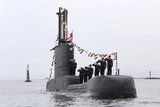
Commissioning ceremony in Itaguaí, Rio de Janeiro state. (Photo: Brazilian Navy)
The new SSK will support the protection of a 5.7 million km² area known as the Blue Amazon.


The Brazilian Navy conduct on 1st September the commissioning ceremony of its first Riachuelo-class submarine in Itaguaí (Rio de Janeiro state). The eponymous lead boat is a diesel-electric attack submarine (SSK) that will operate off the Brazilian coast to support the protection of a 5.7 million km² area known as the Blue Amazon.
A press release issued by the Brazilian Navy noted that it will increase ‘the deterrent power of the Brazilian Armed Forces’.
The Brazilian Navy noted that, Riachuelo-class submarines are more versatile than the boats it already operates and ‘are considered operationally superior to several submarines currently available in the world’.
Shephard Defence Insight notes that Riachuelo-class SSKs are based on the Scorpene design from French shipbuilder Naval Group and feature six 533 mm torpedo tubes that can host F21 torpedoes or Exocet SM39 Block 2 Mod 2 anti-ship missiles.
This system was designed to replace the ageing Tupi and Tikuna-class systems and was acquired under the PROSUB programme, which comprises the procurement of five new submarines (four SSKs and one nuclear-powered).
Related Programmes in Defence Insight
Related Equipment in Defence Insight


More from Naval Warfare
-
![Can the US Navy ask Indo-Pacific allies to do more while training with them less?]()
Can the US Navy ask Indo-Pacific allies to do more while training with them less?
As the Iran War draws US ships and marine corps units away from the Indo-Pacific, curtailed exercises and a temporary carrier gap are exposing tensions between Washington’s demand for more self-reliant allies and the joint training needed to realise that ambition.
-
![How could Rheinmetall’s GMF 140 fit with ongoing programmes in North America?]()
How could Rheinmetall’s GMF 140 fit with ongoing programmes in North America?
With Canada committed to its River-class replacement and the USN pursuing a lower-cost frigate, Rheinmetall will need to demonstrate where the GMF 140 can fill a capability gap in the North American fleet.
-
![South Korea, Japan and Turkey vie for US shipbuilding access in future frigate contest]()
South Korea, Japan and Turkey vie for US shipbuilding access in future frigate contest
Washington’s search for a foreign-built frigate could hand South Korea, Japan and Turkey a larger prize than a double-hull order: a foothold inside the US shipbuilding industrial base.
-
![Japan’s FY2027 budget bets on stand-off systems to offset demographic decline]()
Japan’s FY2027 budget bets on stand-off systems to offset demographic decline
Japan’s FY2027 defence budget backs stand-off strike, a 17-aircraft MQ-9B buy and a declared bid to lead the world in uncrewed maritime assets, alongside new frigates, submarines and support ships.