Brazil launches first of five French-tech attack subs


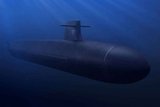
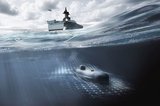
Brazil, on 14 November, has launched the first of five navy attack submarines it is building under a $7.6 billion technology-sharing deal struck with France.
President Michel Temer and his elected successor Jair Bolsonaro attended the hours-long ceremony in a navy base in Itaquai, near Rio de Janeiro, that saw the 72m vessel slowly lowered into Atlantic Ocean waters.
Temer’s wife Marcela Temer baptized the sub, called the ‘Riachuelo’ after a 19th-century Brazilian naval victory against Paraguayan ships, with the traditional smashing of a bottle of champagne. It will now undergo two years of sea trials before entering service.
The fleet of submarines is to protect Brazil’s 8,500km of coastline and territorial waters, which include deep-water oil fields vital for the country’s economy.
Four of the new vessels, including the Riachuelo, will be diesel-powered and are all to be completed by the end of 2022.
One is to be nuclear-powered, giving it far greater range and the ability to stay submerged for long periods, but is now expected to be launched in 2029, six years behind schedule.
The vessels are being built as bigger versions of France’s Scorpene-class of attack submarines under a 2008 deal agreed on condition that Brazil acquire the necessary technology, except for the nuclear reactor in the last submarine.
‘It is a combination of French technology with the capabilities and resources of the Brazilian Navy, a sort of tropicalization [of the Scorpene] to protect our vast territory,’ said Andre Portalis, head of the ICN consortium building the vessels.
Other countries have also chosen Scorpene-class subs to add to their navies, including Chile, Malaysia and India.
India has been rattled by leaks to an Australian newspaper of top secret information on the six Scorpene boats it is building. The French shipbuilder behind the submarine, DCNS, has taken legal action to try to stop the leaks.
You may also like
More from Naval Warfare
-
![Competitive P17B tender marks a shift in Indian Navy frigate procurement]()
Competitive P17B tender marks a shift in Indian Navy frigate procurement
The Indian Navy's P17B programme is expected to combine greater weapons capacity with a competitive domestic construction model, although key systems could remain dependent on international supply chains.
-
![How France’s SNLE 3G programme is reshaping the naval nuclear industrial base]()
How France’s SNLE 3G programme is reshaping the naval nuclear industrial base
Extending far beyond a four-submarine replacement programme, France’s ballistic missile submarine effort is a decades-long industrial initiative designed to preserve the country’s ability to build and sustain nuclear-powered strategic platforms.
-
![China’s mineral processing dominance exposes naval supply chain vulnerabilities]()
China’s mineral processing dominance exposes naval supply chain vulnerabilities
Competition for critical minerals, and China’s dominance of their processing, is emerging as a decisive factor in future naval procurement programmes.
-
![Suppliers await next step in Australia’s mine warfare transition]()
Suppliers await next step in Australia’s mine warfare transition
Australia’s mine countermeasure capability remains in flux as the Huon-class nears retirement, but accelerated investment in autonomous systems is opening a path for industry.
-
![Can the US Navy ask Indo-Pacific allies to do more while training with them less?]()
Can the US Navy ask Indo-Pacific allies to do more while training with them less?
As the Iran War draws US ships and marine corps units away from the Indo-Pacific, curtailed exercises and a temporary carrier gap are exposing tensions between Washington’s demand for more self-reliant allies and the joint training needed to realise that ambition.