Belgians and Dutch rename future ASW frigate programme
The Belgian and Dutch navies will each receive two Anti-Submarine Warfare Frigates, which will enter service by 2030.


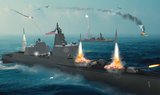
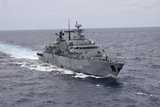
The future Joint Future Surface Combatant for the Belgian Navy and Royal Netherlands Navy has officially been renamed as the Anti-Submarine Warfare Frigate (ASWF).
Each navy will receive two ASWFs to replace their Karel Doorman-class frigates. Discussions are under way with Damen Schelde Naval Shipbuilding and Thales on vessel and equipment specifications.
The frigate replacement programme is being run by Dutch procurement agency DMO in concert with its Belgian counterpart DGMR. They envisage that all four vessels will be in service by 2030, but Shephard Defence Insight notes that limited budgets in both countries translated into sluggish progress on the programme.
Belgium has approved funding of €1 billion ($1.2 billion) for its pair of ships, while the Netherlands is expected to spend about €1.5 billion.
No names have been assigned to the four new vessels, the Belgian MoD noted on 13 January.
The four ASW frigates will include technology for information warfare, ‘the latest anti-submarine warfare techniques and robust self-defence against surface threats’, the MoD added. ‘There is also extensive automation in order to be able to conduct operations with a limited basic crew’.
As part of our promise to deliver comprehensive coverage to our Defence Insight and Premium News subscribers, our curated defence news content provides the latest industry updates, contract awards and programme milestones.
Related Programmes in Defence Insight
Joint Future Surface Combatant - FSC (3-4) [Netherlands]
Joint Future Surface Combatant - FSC (1-2) [Netherlands]
Joint Future Surface Combatant - FSC (1-2) [Belgium]
Related Equipment in Defence Insight

You may also like
More from Naval Warfare
-
![US Navy’s $275 billion BBGN plan hinges on shipyard transformation]()
US Navy’s $275 billion BBGN plan hinges on shipyard transformation
The US Navy’s planned nuclear-powered warship carries a US$275 billion price tag, but the greater story lies in the industrial overhaul needed to build it, from AI-enabled design to digital twins and modular construction.
-
![Industry sees opportunity in Australia’s shift to networked undersea warfare]()
Industry sees opportunity in Australia’s shift to networked undersea warfare
Australia’s new defence innovation strategy indicates a shift from platform-centric to network-centric undersea warfare, with Ocius and Anduril Industries pointing to fast-growing opportunities for local industry.
-
![Asia-Pacific emerges as the largest export market for US-made USVs]()
Asia-Pacific emerges as the largest export market for US-made USVs
Asian customers have placed one of the largest known international purchases of US-built uncrewed surface vessels, highlighting accelerating regional demand for autonomous maritime capabilities and distributed naval operations.
-
![RTX confirms US Marine Corps and US Navy acquire Hadalus UUV]()
RTX confirms US Marine Corps and US Navy acquire Hadalus UUV
RTX told Shephard that the Hadalus UUV has been procured by the US Marine Corps and the Office of Naval Research for operational experimentation as the company prepares additional demonstrations with the US Navy, NATO and AUKUS partners.
-
![The UK joins the movement towards joint procurement]()
The UK joins the movement towards joint procurement
The UK will spend an estimated US$3.89 billion over the next decade in joint naval programmes, a lot of which will be in cooperation with Norway.