Bahamas receives last Stan Patrol 4207 vessel


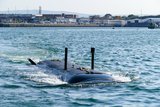
The Royal Bahamas Defence Force (RBDF) has taken delivery of the HMBS Rolly Gray, the fourth and last Stan Patrol 4207 vessel it had ordered as part of the Sandy Bottom project.
The Stan Patrol 4207 has a crew capacity of 24, a maximum speed of 20kts and a range greater than 2,000nm. Its weapon system includes two RHIBS. The first 4207 arrived in the Bahamas from the Netherlands in May 2014, followed by another one in July and one more in September.
The six-year Sandy Bottom project also includes the upgrading of a Coral Harbour naval base and the development of two new facilities in the Bahamas. The vessel element includes a spares and training package.
Dutch civil engineering company Van Oord is undertaking the design, engineering, dredging and construction of the three ports for the RBDF, including the deepening of access channels and construction of quay walls, breakwaters, buildings, jetties, moorings and facings.
Once the project is complete, the new fleet will have a Damen Stan Lander 5612 dedicated roll-on, roll-off landing craft with a 25-tonne crane and demountable relief equipment. Also, four Damen Stan Patrol 3007 Sea Axe type vessels will be used for combating drug smuggling, human smuggling and other illegal activities, apart from search and rescue missions.
The first 3007 Sea Axe vessel is nearing completion, while the Damen 5612 landing craft is currently under construction. Both vessels will be delivered in the coming months, and the last vessel is due to be delivered by the summer of 2016.
Related Equipment in Defence Insight

You may also like

More from Naval Warfare
-
![Quantum sensing gathers pace as navies eye undersea advantage]()
Quantum sensing gathers pace as navies eye undersea advantage
As AI dominates defence conversations, industry increasingly points to quantum sensing as the technology set to change submarine and uncrewed underwater vehicle operations.
-
![Competitive P17B tender marks a shift in Indian Navy frigate procurement]()
Competitive P17B tender marks a shift in Indian Navy frigate procurement
The Indian Navy's P17B programme is expected to combine greater weapons capacity with a competitive domestic construction model, although key systems could remain dependent on international supply chains.
-
![How France’s SNLE 3G programme is reshaping the naval nuclear industrial base]()
How France’s SNLE 3G programme is reshaping the naval nuclear industrial base
Extending far beyond a four-submarine replacement programme, France’s ballistic missile submarine effort is a decades-long industrial initiative designed to preserve the country’s ability to build and sustain nuclear-powered strategic platforms.
-
![China’s mineral processing dominance exposes naval supply chain vulnerabilities]()
China’s mineral processing dominance exposes naval supply chain vulnerabilities
Competition for critical minerals, and China’s dominance of their processing, is emerging as a decisive factor in future naval procurement programmes.
-
![Suppliers await next step in Australia’s mine warfare transition]()
Suppliers await next step in Australia’s mine warfare transition
Australia’s mine countermeasure capability remains in flux as the Huon-class nears retirement, but accelerated investment in autonomous systems is opening a path for industry.