Babcock eyes a bigger slice of the Australian naval sustainment market
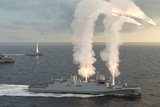
The Naval Ship Management JV between Babcock and UGL cut its teeth with work on RAN Anzac-class frigates. (Photo: RAN)
Babcock is buying out its partner in the Naval Ship Management JV.


Babcock is to gain full ownership of its Naval Ship Management (NSM) JV for Australian naval sustainment.
The UK-based company announced in a 15 February statement to the London Stock Exchange that it has entered into an agreement to buy out UGL’s 50% stake in NSM for A$60 million ($42.68 million), ‘subject to customary approvals’.
Babcock’s stated aim is to strengthen the breadth of its support to the Australian Defence Force’s maritime capability ‘and to provide additional capability for Australia’s current and future maritime programmes’.
Babcock and UGL established NSM in 2012 to provide maintenance support for Royal Australian Navy Anzac-class frigates. The JV evolved since then to provide maritime sustainment services for other vessels such as the two Canberra-class landing helicopter docks.
In its most recent full-year results (for 12 months to 31 March 2021), NSM posted revenues of A$254 million.


More from Naval Warfare
-
![Quantum Systems enters maritime domain with Baltic-focused USV and UUV]()
Quantum Systems enters maritime domain with Baltic-focused USV and UUV
Quantum Systems has launched into the maritime domain with Seavex and Subvex, aiming to close a Baltic Sea ISR gap opened by infrastructure sabotage.
-
![Can the US Navy ask Indo-Pacific allies to do more while training with them less?]()
Can the US Navy ask Indo-Pacific allies to do more while training with them less?
As the Iran War draws US ships and marine corps units away from the Indo-Pacific, curtailed exercises and a temporary carrier gap are exposing tensions between Washington’s demand for more self-reliant allies and the joint training needed to realise that ambition.
-
![How could Rheinmetall’s GMF 140 fit with ongoing programmes in North America?]()
How could Rheinmetall’s GMF 140 fit with ongoing programmes in North America?
With Canada committed to its River-class replacement and the USN pursuing a lower-cost frigate, Rheinmetall will need to demonstrate where the GMF 140 can fill a capability gap in the North American fleet.
-
![Australian industry programme builds pipeline for Virginia-class sustainment]()
Australian industry programme builds pipeline for Virginia-class sustainment
Australian businesses can now bid to support Virginia-class submarine sustainment in Western Australia, as momentum around the Henderson Defence Precinct also builds.