Babcock backs both designs for Korean aircraft carrier
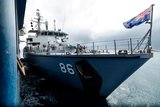
Babcock has been increasing its presence Korea, most recently with its investment in a facility in Busan. (Photo: Babcock)
Babcock has signed an MoU with Daewoo Shipbuilding and is now backing both of the main contenders for Korea’s CVX programme.


Babcock has signed an MoU with Daewoo Shipbuilding & Marine Engineering, one of Korea’s largest shipyards, to collaborate on systems integration programmes for future vessels.
This follows the MoU signing between Babcock and Hyundai Heavy Industries (HHI) in June 2021 focusing on the South Korean Navy’s CV eXperimental (CVX) future light aircraft carrier programme.
As HHI and Daewoo Shipbuilding are the two major competitors for the CVX programme, Babcock appears to be guaranteed to influence the vessel’s design, bringing its experience designing and manufacturing the UK RN’s Queen Elizabeth-class carriers.
At the time of Babcock and HHI’s MoU signing, the potential for the CVX programme seemed tenuous, with debates questioning if an aircraft carrier would optimally address the Republic of Korea’s security concerns.
The National Defense Committee refused an application for KRW101 billion ($90.9 million) for CVX research requirements for FY2021, instead, the ministry was given just $900,000.
The rationale was that the projection of airpower a single carrier provides is less significant when considering the proximity of North Korea and insufficient when compared to the size and capabilities of the PLAN.
However, the Korean National Assembly approved the KRW7.2 billion (around $6.1 million) budget for CVX development in the final month of 2021 and the programme appears to be progressing.




More from Naval Warfare
-
![Quantum sensing gathers pace as navies eye undersea advantage]()
Quantum sensing gathers pace as navies eye undersea advantage
As AI dominates defence conversations, industry increasingly points to quantum sensing as the technology set to change submarine and uncrewed underwater vehicle operations.
-
![Competitive P17B tender marks a shift in Indian Navy frigate procurement]()
Competitive P17B tender marks a shift in Indian Navy frigate procurement
The Indian Navy's P17B programme is expected to combine greater weapons capacity with a competitive domestic construction model, although key systems could remain dependent on international supply chains.
-
![How France’s SNLE 3G programme is reshaping the naval nuclear industrial base]()
How France’s SNLE 3G programme is reshaping the naval nuclear industrial base
Extending far beyond a four-submarine replacement programme, France’s ballistic missile submarine effort is a decades-long industrial initiative designed to preserve the country’s ability to build and sustain nuclear-powered strategic platforms.
-
![Quantum Systems enters maritime domain with Baltic-focused USV and UUV]()
Quantum Systems enters maritime domain with Baltic-focused USV and UUV
Quantum Systems has launched into the maritime domain with Seavex and Subvex, aiming to close a Baltic Sea ISR gap opened by infrastructure sabotage.
-
![Suppliers await next step in Australia’s mine warfare transition]()
Suppliers await next step in Australia’s mine warfare transition
Australia’s mine countermeasure capability remains in flux as the Huon-class nears retirement, but accelerated investment in autonomous systems is opening a path for industry.