Australia’s AWD Brisbane starts sea trials


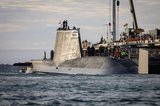
The Royal Australian Navy’s future Air Warfare Destroyer (AWD) Brisbane has started the first phase of its sea trials, the Australian Department of Defence announced on 21 November.
The trials will test the ship’s hull, propulsion and navigation systems, and will be followed by a more advanced phase of sea trials next year to test combat and communications systems.
The start of Brisbane’s sea trials phase follows the commissioning of the first AWD, HMAS Hobart, earlier this year.
Minister for Defence Industry, Christopher Pyne, said: ‘Over the past decade, more than 5000 people from across the Department of Defence, ASC, Raytheon Australia and Navantia have dedicated millions of hours of effort to the AWD programme.
‘Through the AWD programme, we have created a local workforce with specialist shipbuilding and complex systems integration skills that will form the foundation for future shipbuilding projects in Australia.’


More from Naval Warfare
-
![Five years on: where could opportunities emerge next for AUKUS Pillar II?]()
Five years on: where could opportunities emerge next for AUKUS Pillar II?
Payload commonality, combat systems and electronic warfare are emerging as likely priorities as the trilateral partnership balances building submarines with sharing industrial ecosystems.
-
![From the Baltic to the Gulf: where USV procurement is heading next]()
From the Baltic to the Gulf: where USV procurement is heading next
Saildrone’s new Copenhagen base is one sign of a larger shift, as navies globally turn to uncrewed vessels for surveillance and mine clearance.
-
![Quantum sensing gathers pace as navies eye undersea advantage]()
Quantum sensing gathers pace as navies eye undersea advantage
As AI dominates defence conversations, industry increasingly points to quantum sensing as the technology set to change submarine and uncrewed underwater vehicle operations.