Australian navy acquires five Bluebottle USVs
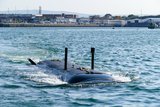
This Bluebottle named Brizo is seen patrolling remote Western Australia waters near Winy Alkan Island as part of Operation Resolute. (Photo: Department of Defence)
Australia steams ahead with new investment in indigenously developed USVs, plus a means of recovering/launching UUVs.


The Royal Australian Navy (RAN) has bought another five Bluebottle autonomous persistent USVs from Ocius Technology.
A contract was announced by Head of Navy Capability RAdm Pete Quinn at a christening ceremony for the eighth and ninth hulls (Barra and Bombora, respectively). The ceremony occurred after Ocius’ annual general meeting on 24 November.
The contract is worth A$4.9 million ($3.3 million), and the five Bluebottles will be manufactured this year.
Quinn commented: ‘Over five years, as Head of Naval Capability, it has been fantastic being involved with Ocius and seeing Australian technology at the forefront.
‘Systems like Ocius Bluebottles
Our news & analysis is now part of Defence Insight®
A Basic-level or higher Defence Insight subscription is now required to view this content.


More from Naval Warfare
-
![Denmark’s air defence frigate requirement draws growing European competition]()
Denmark’s air defence frigate requirement draws growing European competition
With no formal competition under way, industrial partnerships, production capacity and air defence capability could all shape the programme as Denmark considers how to replace its three Iver Huitfeldt-class frigates.
-
![Singapore expands maritime presence with future-ready Sentinel OPV]()
Singapore expands maritime presence with future-ready Sentinel OPV
Singapore is building space for uncrewed systems and future technologies into its new Sentinel-class OPVs, reflecting a wider move towards adaptable vessels capable of maintaining persistent maritime presence.
-
![Israeli Navy looks to expand as war reshapes future force requirements]()
Israeli Navy looks to expand as war reshapes future force requirements
Israel’s navy is preparing for a larger and more technically diverse role, but its ambitions could be impacted by supply chain restrictions, accelerating demand for domestic naval production as well as autonomous maritime capabilities.