Are Australia’s SSN ambitions ‘sub-optimal’? (Opinion)
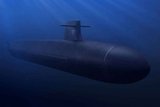
The USN currently has 19 nuclear-powered Virginia-class SSN vessels in service, with USS North Dakota pictured here. (Photo: USN)
Some describe Australia’s SSN plans as marking the country’s coming of age, but there are still too many questions whether it will work out the way planners imagine.


In 2021, Australia declared it had set its heart on obtaining nuclear-powered attack submarines (SSN) to help meet the strategic threat posed primarily by China. As the leaders of Australia, the UK and the US assembled in San Diego on 13 March to announce the optimal pathway forward, it all appeared rather straightforward on paper.
But let there be no mistake. Australia has set itself a Herculean task, one where the instigators of AUKUS perhaps did not realise the sheer magnitude that lay before them. Furthermore, the country is locking itself into a route from which there is little chance
Our news & analysis is now part of Defence Insight®
A Basic-level or higher Defence Insight subscription is now required to view this content.



More from Naval Warfare
-
![Competitive P17B tender marks a shift in Indian Navy frigate procurement]()
Competitive P17B tender marks a shift in Indian Navy frigate procurement
The Indian Navy's P17B programme is expected to combine greater weapons capacity with a competitive domestic construction model, although key systems could remain dependent on international supply chains.
-
![Quantum Systems enters maritime domain with Baltic-focused USV and UUV]()
Quantum Systems enters maritime domain with Baltic-focused USV and UUV
Quantum Systems has launched into the maritime domain with Seavex and Subvex, aiming to close a Baltic Sea ISR gap opened by infrastructure sabotage.
-
![Suppliers await next step in Australia’s mine warfare transition]()
Suppliers await next step in Australia’s mine warfare transition
Australia’s mine countermeasure capability remains in flux as the Huon-class nears retirement, but accelerated investment in autonomous systems is opening a path for industry.
-
![Can the US Navy ask Indo-Pacific allies to do more while training with them less?]()
Can the US Navy ask Indo-Pacific allies to do more while training with them less?
As the Iran War draws US ships and marine corps units away from the Indo-Pacific, curtailed exercises and a temporary carrier gap are exposing tensions between Washington’s demand for more self-reliant allies and the joint training needed to realise that ambition.