US Army plans next steps for Project Origin
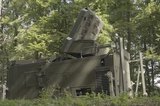
US Army conducted trials with Project Origin platform at Fort Polk, Louisiana. (Photo: US Army)
US Army Soldier Touchpoint evaluations for robotic ground vehicles will take place in Q1 2022, comprising tests and demonstrations to inform future decisions on whether to acquire the capability.


US Army Combat Capabilities Development Command (DEVCOM) intends to make further progress with its Project Origin test and demonstration platform, with an eye on acquiring Robotic Combat Vehicles (RCVs) in the medium term.
The army has already defined a series of Soldier Touchpoints to be carried out in Q1 2022. Feedback and technical data from these tests and demonstrations will inform future decisions on whether to procure RCVs.
Todd Willert, project manager for Project Origin at the US Army Ground Vehicle Systems Center, explained to Shephard that the trials seek to increase the live-fire capability of robotic ground platforms with a new live-fire dismounted controller and new
Our news & analysis is now part of Defence Insight®
A Basic-level or higher Defence Insight subscription is now required to view this content.

You may also like

More from Land Warfare
-
![Push strengthens for a second JLTV supplier]()
Push strengthens for a second JLTV supplier
A move, launched in May, could lead to a second supplier for the US Marines Corps’ Joint Light Tactical Vehicle requirement. Meanwhile, Wisconsin elected representatives have been pushing for necessary funding to be included in the FY27 budget.
-
![Canada reveals first requirements for future long-range air-to-air missile]()
Canada reveals first requirements for future long-range air-to-air missile
Exclusive: Ottawa says its future NORAD interceptor must be highly stealthy, resistant to jamming and capable of engaging threats at very long range, while leaving the competition open to domestic and international suppliers.
-
![July land forces roundup: UK outlines spending with details unveiled on Eurosatory vehicles]()
July land forces roundup: UK outlines spending with details unveiled on Eurosatory vehicles
Analysis of the long-awaited UK Defence Investment Plan, which was finally released on 30 June, revealed scant investment in platform replacement for the British Army. The bright spot in July, however, was a multibillion-dollar contract awarded for the British Army’s Collective Training System.
-
![Italian Army advances plans for 155m wheeled artillery fleet]()
Italian Army advances plans for 155m wheeled artillery fleet
With a requirement for 60 systems, the Italian Army is preparing to complement its tracked artillery with a modern wheeled solution based on domestic industry.
-
![Europe’s eastern flank moves on air defence radars with wider efforts also underway]()
Europe’s eastern flank moves on air defence radars with wider efforts also underway
Air defence radars have become more important assets in the past year with incursions in NATO countries on Europe’s eastern flank highlighting the need.