Turkiye’s Tayfun ballistic missile heads for mass production after second test firing
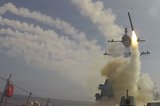
The test launch took place from Rize-Artvin on the Black Sea coast. The site is further away from Ukrainian and Russian airspace than the range at Sinop. (Photo: SSB)
The second test firing in May used a different mobile launcher to the first, as developer Roketsan says the short-range ballistic missile is ready for mass production.


On 23 May, the head of the Turkish Defence Agency (SSB), Ismail Demir, announced the second test firing of Roketsan’s Tayfun short-range ballistic missile (SRBM), the country’s first such weapon programme.
He shared a short video prepared for the test, but neither he nor Roketsan officials revealed any information about firing. It is known that the missile was launched at 06:44am at the Rize-Artvin airport site on the Black Sea coast.
The first test firing was aimed at a target at 560km distance in October 2022.
In this test last year, the Tayfun missile was mounted on a BMC 525-44 8x8
Our news & analysis is now part of Defence Insight®
A Basic-level or higher Defence Insight subscription is now required to view this content.

You may also like
More from Land Warfare
-
![US pours another $23 billion into Arsenal of Freedom to ramp up missile production]()
US pours another $23 billion into Arsenal of Freedom to ramp up missile production
The US Department of Defense (DoD) is spending billions of dollars to accelerate missile production to meet demands from the war against Iran and requirements in Ukraine. Manufacture of SM-3 and PAC-3 interceptors is being ramped up, alongside a $22.9 billion commitment to Tomahawk cruise missiles.
-
![Boxer lands another order as contracts and opportunities build momentum]()
Boxer lands another order as contracts and opportunities build momentum
As Germany prepares its €25 billion order under the Arminius framework – the biggest Boxer procurement to date – the platform could become an increasingly powerful contender in European competitions.
-
![Trans-European iMUGS2 uncrewed systems programme set for three-day exercise in 2028]()
Trans-European iMUGS2 uncrewed systems programme set for three-day exercise in 2028
The next stage of the Integrated Modular Unmanned Ground System (iMUGS) programme, dubbed iMUGS2, was launched in November 2025. Three major demonstrations are planned before the end of 2028.
-
![British Army Land Rover replacement plan inches forward]()
British Army Land Rover replacement plan inches forward
The UK Ministry of Defence has proposed a selection date of May 2027 for the Land Rover replacement requirement, with deliveries expected through to 2036. Next month’s DVD exhibition will be a key shop window for bidders.