Digital Terminal Control System for Hawkei


Rockwell Collins will integrate the Digital Terminal Control System (DTCS) into the Integral Computing System (ICS) of the Hawkei protected mobility vehicle-light system. The company announced its selection by Thales Australia for the work on 2 March.
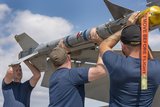
The DTCS gives joint terminal attack controllers and joint fires observers the ability to integrate with airborne assets, artillery and naval platforms.
The flexible, wearable solution is designed for ground targeting, air support and call-for-fire missions with the ability to be integrated on tanks and combat vehicles. Vehicle integrations enable the soldier to leverage more capable sensors and communication systems that are organic to the vehicle.
Rockwell Collins will deliver a first-of-type system and then will design, support Thales Australia to develop, integrate and test the DTCS. Work will run through February 2018.
Nick Gibbs, managing director of Rockwell Collins in Australia, said: ‘The collaborative relationship that our company has with the Australian Defence Force has provided a foundation for the delivery of reliable joint fires solutions under the Land 17 programme.’
Related Equipment in Defence Insight



More from Land Warfare
-
![How joint ventures are expanding Rheinmetall's munitions portfolio (video)]()
How joint ventures are expanding Rheinmetall's munitions portfolio (video)
Roman Köhne, CEO of Rheinmetall's Weapon and Ammunition Division, discusses the company's announcements at Eurosatory 2026, including developments in defence technology, precision systems, industrial partnerships and future capability programmes.
-
![Canada reveals first requirements for future long-range air-to-air missile]()
Canada reveals first requirements for future long-range air-to-air missile
Exclusive: Ottawa says its future NORAD interceptor must be highly stealthy, resistant to jamming and capable of engaging threats at very long range, while leaving the competition open to domestic and international suppliers.
-
![July land forces roundup: UK outlines spending with details unveiled on Eurosatory vehicles]()
July land forces roundup: UK outlines spending with details unveiled on Eurosatory vehicles
Analysis of the long-awaited UK Defence Investment Plan, which was finally released on 30 June, revealed scant investment in platform replacement for the British Army. The bright spot in July, however, was a multibillion-dollar contract awarded for the British Army’s Collective Training System.