Swiss places order for 81mm mortar ammunition
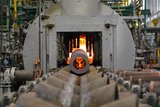
Rheinmetall will supply mortar rounds to Switzerland. (Photo: Rheinmetall)
The multi-million euro order has been scheduled to be completed by 2025 and will feature additional services as part of the product launch.


Rheinmetall will supply 81mm mortar cargo ammunition and MX2-KM 81mm mortar weapons to the Swiss Army in an order the company said was in the mid double-digit million euro range.
The 81mm mortar cartridges include illumination white light, illumination infrared and smoke discharge based on RP (Red Phospor), which are manufactured by Rheinmetall Waffe Munition GmbH at its Neuenburg am Rhein plant.
The cartridges are qualified for the MX2-KM mortar of the Swiss armed forces and, together with the weapon system, form a mortar system in which both the ammunition and the weapon system are manufactured by Rheinmetall.
At the end of the qualification measures, the cargo cartridges were verified at a test site on the Spanish coast.
Rheinmetall has benefited from strong demand for artillery, mortars, mortar rounds and munitions since Russia’s full-scale invasion of Ukraine in 2022 and its purchase of Expal Munitions. The acquisition of Expal Munitions was completed in August 2023 and has boosted the company’s production capabilities.
The company reported that for the first quarter of 2024, consolidated sales climbed by €218 million (US$236.6 million) or 16% to €1.6 billion compared to the same period in 2023 of €1.4 billion, which, when adjusted for currency effects, was up 17%.
The Weapon and Ammunition division generated sales of €362 million in the first quarter of 2024, outperforming the figure for the previous year by €149 million or 70%. Key projects included artillery orders for Germany and Ukraine.
The backlog for the division more than doubled, rising by €6.4 billion or around 123% to €11.6 billion as of 31 March. The main factor driving this was the signing of two multi-year multi-billion euro ammunition framework agreements in the second half of 2023 for the German government and the Ukrainian armed forces.

More from Land Warfare
-
![Front-line support: how UK industry is helping tackle Ukraine’s landmine challenges]()
Front-line support: how UK industry is helping tackle Ukraine’s landmine challenges
Pearson Engineering has provided equipment and engineering expertise to the Armed Forces of Ukraine since the beginning of the full-scale Russian invasion in 2022. The British company is now working to deepen engagement with the Ukrainian defence industry, expanding its support for the country’s population and laying the foundations for future technological innovation.
-
![AUSA 2026: industry looks to make commercial platforms a military reality]()
AUSA 2026: industry looks to make commercial platforms a military reality
With a production rate of more than 10 million vehicles annually, the US commercial car and vehicle manufacturing base is second only to China. Defence companies are looking at how the vehicles, technology and manufacturing capability can support programmes.
-
![With changing patterns in Middle Eastern procurement, is Europe missing out?]()
With changing patterns in Middle Eastern procurement, is Europe missing out?
Traditional suppliers are struggling to meet the Middle East’s armoured vehicle modernisation needs, creating opportunities for South Korean manufacturers and regional defence industries.
-
![AUSA 2026: CUAS market expands as suppliers target new threats and operational requirements]()
AUSA 2026: CUAS market expands as suppliers target new threats and operational requirements
New developments from MARSS, MyDefence, Mountain Horse Solutions and Rafael suggest that future counter-drone protection will increasingly depend on combining advanced detection, rapid interception and integrated defensive networks.