Enjoy free access to this sponsored article, all content provided by Systematic.
Open-architecture software systems come with a wide variety of benefits – the ability to reduce the risk of vendor lock through simpler integration being a key one. As AI technology helps with code production – alongside low-code and no-code systems – the opportunities to extend the capabilities of a platform face fewer roadblocks than before.
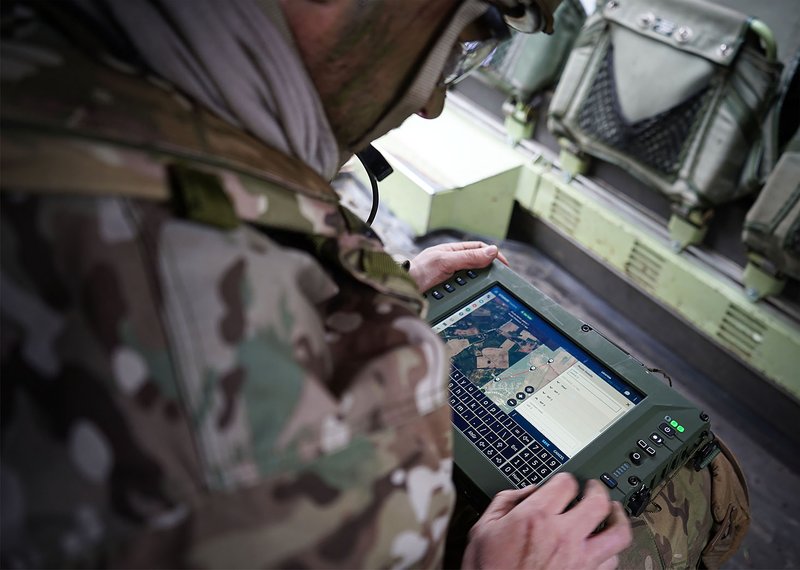
As the process of selecting, accrediting, commissioning and maintaining software can be a complex prospect for any military force, open-architecture systems help deliver a future-proof capability to end users. Plug-ins that are developed to interface with an open-architecture system can provide support for new hardware and software and help to increase the lifespan of its components. For battle management systems such as the SitaWare suite, this can range from integration of radio systems through to facilitating delivery of video feeds from new unmanned systems.
How can these integrations be created?
The integration of new systems into a central software hub is achieved through development of a plug-in using an application programming interface (API). These APIs deliver data from one platform to another through standardised schemas to support a centralised software system. API development is facilitated through use of software development kits (SDKs), which ensure that data can be ingested and then used correctly.
In creating these plug-ins and APIs, there are a number of best practices that need to be followed for successful, long-running integrations between two software systems. Relying on self-made or third-party plug-ins runs the risk of integrations not being updated adequately – ultimately harming operational readiness.
So how can integration problems be avoided, while maintaining continued functionality?
The top five best practices for open-architecture integrations
1 Continual engagement with the main software provider
In the software domain, patches, hot fixes, updates and major version upgrades can be developed and rolled out much faster than a hardware update, delivering new features more readily. Subsystem integrators need to engage regularly with a software supplier to monitor updates and changes, checking for the impact on their own subsystems and how it can impact the wider user experience and interface. Engaging with the provider can also help with potentially influencing future roadmaps and development spirals, as manufacturers need to hear about the use cases for their software and equipment based on real-world cases.
2 Embrace common data fields, limit bespoke data fields
As data is becoming more critical in the battlespace, having it properly structured for delivery and integration is just as important. Large amounts of unstructured or poorly structured data can make operation and searchability difficult, while also lengthening software loading times. Leveraging the data schema of the core platform helps to reduce the challenges of working with large data, optimising load times and enhancing the potential to operate at scale.
3 Test, test, and test again
Continually test and evaluate your plug-ins both during the development journey, and when they proceed to the live environment. Be sure to document all the testing work carried out and any fixes that were undertaken to help identify the root causes of any issues that may arise later. Keep in close contact with end users to get feedback throughout the operational process to help drive future testing, deliver improvements for your integration, and adapt to unforeseen changes in system usage.
4 Streamline code for optimised delivery
As part of the development and staging processes, reviewing the code used for a plug-in can help to deliver better functionality for the end user, identify areas for best practice and improvements, gaps in documentation and more. Undertaking these reviews on a regular basis once in production can also validate the plug-in’s compatibility with the most recent versions of the core software and SDK. This can potentially help reduce the size of the plug-in as new features are added to the core platform.
5 Consider the maintenance burden
Once the plug-in and API have been successfully delivered, this is just the beginning of the journey. Ensuring an extension is properly maintained is a major factor in delivering ongoing capability to users and reducing the risk of reduced system performance. Plug-ins need to be maintained, so they are keeping in line with the latest version of the core software, with the SDK ensuring that developed add-ons are properly verified for use.
Are all systems ready for the next mission? Have upgrades been applied? Are all assets aligned to deploy together, on time and fully prepared? In modern defence operations, readiness is no longer measured platform by platform. It is measured by how well people, assets, data and decisions move together — across land, sea and air.
Extended reality (XR) is becoming increasingly relevant in military aviation training, adding a flexible layer to an integrated ecosystem spanning the pilot, crew, and maintenance domains.
ASELSAN is showcasing its advanced electronic warfare (EW) capabilities at MSPO 2026, highlighting technologies designed to detect, analyse, disrupt and deceive threats across increasingly contested electromagnetic environments.
In Conversation… Speaking to Shephard’s Gerrard Cowan, Dr Brian Shand, Director – Advanced Concepts & Technology at L3Harris, explains how, as operators face growing numbers of low-cost drones, C-UAS providers must focus on reducing operator workload, transforming fragmented sensor data into effective decision-making.
Roman Köhne, CEO of Rheinmetall's Weapon and Ammunition Division, discusses the company's announcements at Eurosatory 2026, including developments in defence technology, precision systems, industrial partnerships and future capability programmes.