Enjoy free access to this sponsored article, all content provided by Fischer Connectors.
The digital battlefield is evolving. Under the Next Generation Command and Control (NGC2) paradigm, soldiers must be fully connected – acting as digital nodes in a secure, interoperable network linking individuals, squads, and command centers.
But delivering this vision is no simple task. As Fischer Connectors’ recent Tech Insights paper points out, soldier systems still face major connectivity challenges: powering multiple devices, managing data flows, ensuring ruggedness, and integrating equipment from multiple vendors.
KEYSTONE: The Connectivity Backbone
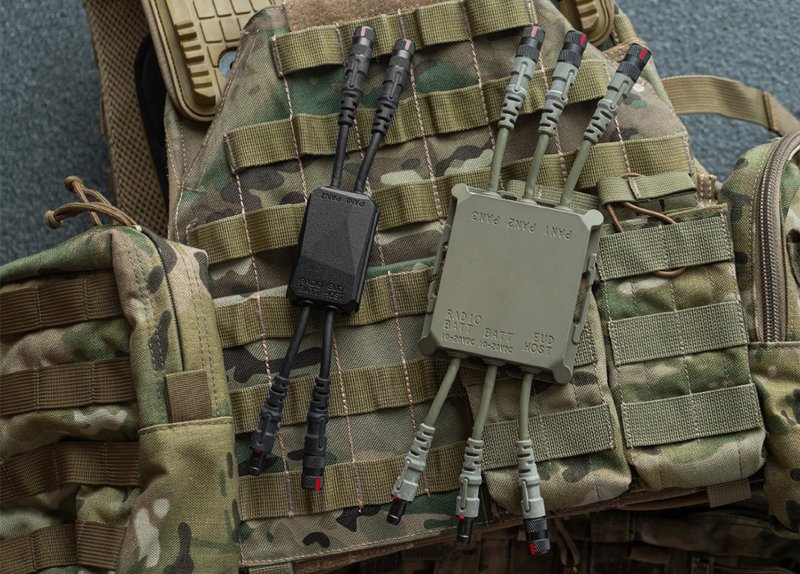
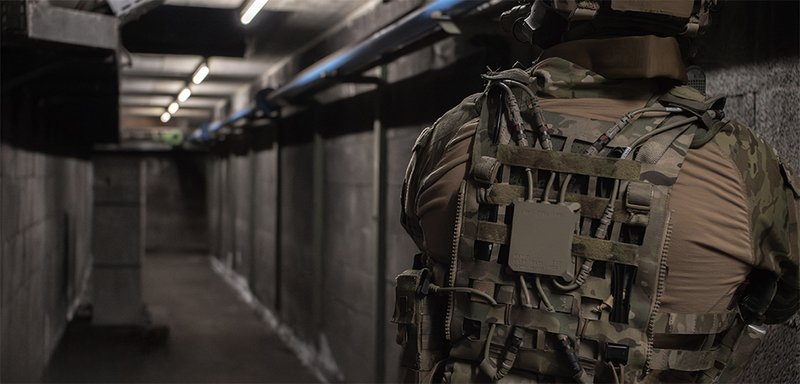
The Fischer KEYSTONE™ solution was designed specifically to overcome these hurdles. As a family of soldier-worn data and power hubs, KEYSTONE provides the backbone for NGC2 integration – rugged, modular, and ready for mission deployment.
Key features include:
Mission-ready hubs – two variants: a compact 4-port hub for minimal load, and a 6-port hub with integrated power management for more complex setups.
Power and data combined – up to 100W total, USB 2.0 data transfer, and bidirectional power delivery (6-port).
Battlefield-proven ruggedness – IP68 sealing (2m/24h), MIL-STD-810 and 461 compliance for shock, vibration, immersion, and EMC/EMI.
Soldier-centric design – lightweight, MOLLE-compatible mounting, intuitive plug-and-play operation, and app-based power monitoring (6-port).
Together, these capabilities enable soldiers to carry less, connect and operate with confidence in demanding environments.
NGC2 aims to unify soldier communications, sensors, navigation, and applications into a coherent digital framework. Fischer KEYSTONE™ supports this vision by delivering:
Interoperability – standardized hubs that integrate seamlessly into wider soldier systems.
Operational readiness – reliable data and power distribution in harsh conditions.
Future-proof flexibility – a modular platform adaptable to new technologies and mission profiles.
Configure your KEYSTONE Solution
Recognizing that every mission has unique connectivity demands, Fischer Connectors has developed the KEYSTONE Configurator – an intuitive online tool that allows defense professionals to tailor KEYSTONE to their specific needs.
With just a few clicks, you can:
Select the hub variant best suited to your mission.
Configure the right cables to connect your devices.
Get all the technical specifications of the configured solution.
It’s a direct way to design the connectivity backbone your soldiers need – aligned to NGC2, ruggedized for the field, and ready for deployment.
As armed forces embrace NGC2, soldier connectivity becomes mission-critical. The Fischer KEYSTONE™ solution provides the rugged, modular, and future-proof backbone required. And with the KEYSTONE Configurator, defense planners and integrators can move from concept to customized solution in minutes.
Author
Industry Spotlight
News and analysis content provided by the aerospace and defence industry, putting a spotlight on …
Are all systems ready for the next mission? Have upgrades been applied? Are all assets aligned to deploy together, on time and fully prepared? In modern defence operations, readiness is no longer measured platform by platform. It is measured by how well people, assets, data and decisions move together — across land, sea and air.
Extended reality (XR) is becoming increasingly relevant in military aviation training, adding a flexible layer to an integrated ecosystem spanning the pilot, crew, and maintenance domains.
ASELSAN is showcasing its advanced electronic warfare (EW) capabilities at MSPO 2026, highlighting technologies designed to detect, analyse, disrupt and deceive threats across increasingly contested electromagnetic environments.
In Conversation… Speaking to Shephard’s Gerrard Cowan, Dr Brian Shand, Director – Advanced Concepts & Technology at L3Harris, explains how, as operators face growing numbers of low-cost drones, C-UAS providers must focus on reducing operator workload, transforming fragmented sensor data into effective decision-making.
Roman Köhne, CEO of Rheinmetall's Weapon and Ammunition Division, discusses the company's announcements at Eurosatory 2026, including developments in defence technology, precision systems, industrial partnerships and future capability programmes.