


Companies downselected for British Army vehicle programme
It is believed that three companies did not make the downselect but a dark horse in Spain’s Iturri is believed to have got through.


Troposcatter is a lightweight and high-bandwidth data link that uses the troposphere to provide a communication network. (Photo: Spectra Group)
Spectra Group is supplying several Troposcatter Compact Over-the horizon Mobile Expeditionary Terminal (COMET) systems to the British Army’s Allied Rapid Reaction Corps (ARRC) HQ under the MoD’s Agile Command and Control (C2) experimentation programme.
The initial contract is worth £1.2 million, with the possibility of extension depending on results and funding.
The capability will support HQ ARRC’s rapid deployment role, allowing transmission of large data volumes in a tactical environment without using host nation infrastructure or satellites.
DSEI 2021: Spectra announces another SlingShot order
Spain acquires additional Elbit radios to support NATO commitments
Persisent Systems to roll out regional network for US Air Force bases
HQ ARRC is at high readiness to deploy and lead the NATO Response Force (NRF) and has significant data communication demands to be met in austere environments.
Spectra delivered two COMET systems to HQ ARRC in January which will allow it to train and deploy with Troposcatter technology, while enhancing the flexibility to respond in a crisis.
Troposcatter COMET was added to the NATO Catalogue in 2022 so any alliance member can purchase directly without going to tender. It is already in service with UK forces such as the Royal Marines.
Troposcatter is a lightweight and high-bandwidth data link that uses the troposphere to provide a communication network. It has low latency and supports wide bandwidth, and is effective in polar regions.


It is believed that three companies did not make the downselect but a dark horse in Spain’s Iturri is believed to have got through.
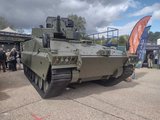
Air defence and counter-drone weapons continue to be developed, tested and demonstrated in anticipation of growing demand, with most solutions designed to be platform-agnostic and readily integrated onto suitable platforms.
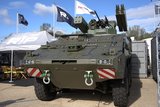
The US Army began its search for a 155mm tracked mobile tactical cannon in an effort that Shephard forecasts could be worth billions of dollars. Meanwhile, the UK DVD exhibition saw companies showcase their offerings for the British Army’s mobility and air defence requirements.
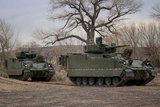
The development demonstrates how the platform could provide additional firepower and growth potential while the US Army progresses its long-term replacement for the Bradley.
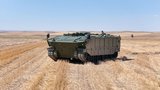
FNSS and PT Pindad are progressing the Indonesian tracked armoured personnel carrier programme as local production gets under way.
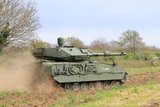
Firing trials of the Tulpar and Leonardo Hitfact Mk II combination follow an integration programme covering mechanical, electrical, electronic and software interfaces.

Connect with us on socials


