Singapore unveils next-generation AFV


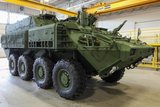
The Singapore Armed Forces has received its first prototype of the Next Generation Armoured Fighting Vehicle (AFV), which is destined to replace the handful of M113 Ultra vehicles that the army still operates.
Jointly developed by the Defence Science Technology Agency (DSTA) and ST Kinetics, the AFV programme started in 2006 and the new platform is expected to be commissioned by 2019.
A crew of three operates the AFV, with up to eight dismounted troops accommodated in the rear. Organic armoured infantry will be able to network with the vehicle through a voice and data link, and via the Army
Our news & analysis is now part of Defence Insight®
A Basic-level or higher Defence Insight subscription is now required to view this content.


More from Land Warfare
-
![Australia’s SM-2 land trial could reshape ADF medium-range air defence plans]()
Australia’s SM-2 land trial could reshape ADF medium-range air defence plans
The first ground launch of the SM-2 could offer Canberra a path to expand its missile defence capability by adapting systems already fielded across the ADF.
-
![UK hits pause on deployable mortar system procurement as US begins search]()
UK hits pause on deployable mortar system procurement as US begins search
The US Army's market survey into available 81mm and 120mm mobile mortar systems was launched only a few days after the UK suspended Project Stokes, an almost identical plan, “pending future decisions on prioritisation, resourcing and funding”.
-
![FIA 2026: MBDA launches low-cost interceptor for short-range air defence]()
FIA 2026: MBDA launches low-cost interceptor for short-range air defence
At FIA 2026, MBDA launched its Counter Mass Interceptor (CMI) which the company says is a mass-producible, low-cost effector for fire-and-forget engagements at range and altitude.
-
![Self-propelled howitzers are driving the European artillery renaissance]()
Self-propelled howitzers are driving the European artillery renaissance
After decades of force reductions as artillery was deprioritised, Europe is now undergoing an artillery renaissance as governments across the continent scramble to invest in new capabilities in response to the war in Ukraine.
-
![“Timelines are measured in seconds”: tackling the UAS threat with dispersed defences]()
“Timelines are measured in seconds”: tackling the UAS threat with dispersed defences
Small uncrewed aerial systems (UAS) have transformed the battlespace, posing a complex threat across all domains. Militaries now need counter-UAS (CUAS) capabilities that defeat the danger while meeting demands around readiness, manoeuvrability and adaptability, according to Mike Spina, Director, Global Sales and Business Development for Targeting and Sensor Systems (TSS) at L3Harris Technologies.