


FNSS advances Indonesian Kaplan APC programme as local production expands
FNSS and PT Pindad are progressing the Indonesian tracked armoured personnel carrier programme as local production gets under way.


Raytheon has announced that it has recently received a new contract to deliver its uncooled thermal systems to an unnamed customer. The award brings the total value of similar contracts received by the company over the past twelve months to more than $75 million.
The contracts include orders for Raytheon’s rugged PhantomIRxr binoculars and thermal weapon sights, both designed with the company’s uncooled advanced thermal detector technology. This technology enables forces to detect, recognise and positively identify threats for engagement of targets equally in day or night, in smoke or fog.
The awards also cover the driver’s vision enhancer (DVE) systems. Tracked and wheeled vehicles equipped with the DVE provide 24-hour manoeuvring capability, including full vehicle mobility in battlefield fog and haze.
Jeff Miller, vice president of Combat and Sensing Systems for Raytheon Missile Systems, said: ‘Raytheon’s uncooled thermal systems give forces a clear advantage: Operating in complete darkness enables the warfighter to use the system in any battlefield condition, increasing survivability and lethality across multiple missions. Our customers expect us to be a long-term partner. We are committed to providing maintenance and spare parts for the next decade and beyond.’

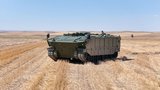
FNSS and PT Pindad are progressing the Indonesian tracked armoured personnel carrier programme as local production gets under way.

Firing trials of the Tulpar and Leonardo Hitfact Mk II combination follow an integration programme covering mechanical, electrical, electronic and software interfaces.

The news from Ukraine has again shown that antitank minefields and other obstacles on the battlefield, such as deep trenches, can play a key role in both offensive and defensive operations. Given this, there will always be a need to clear them, both during and after a conflict.
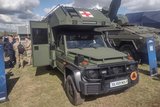
The UK Ministry of Defence has avoided being prescriptive in its search to replace the British Army’s Land Rover, meaning vehicle types being offered range from Land Rover Defender Wolf II and Humvee to the hybrid series Fering Pioneer. What does this mean for the procurement process?

The introduction of Ajax vehicles into British Army service was stopped after operator health issues were reported during an exercise, but manufacturer General Dynamics Land Systems UK believes work over the past 10 months has dealt with the problems.

Sweden, Croatia and France are pursuing different rocket artillery solutions as European armies seek greater reach, survivability and industrial resilience.

Connect with us on socials


