QinetiQ awarded contract for further work on lasers, future systems and energy weapons
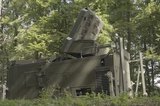
DragonFire laser has been developed under WSRF. (Photo: Leonardo)
Notable projects under the Weapons Sector Research Framework (WSRF) contract include the British Army determining the impact of a vehicle-mounted laser weapon on drones and testing a vehicle-mounted Radio Frequency Directed Energy Weapon (RFDEW).


The UK’s Defence Science and Technology Laboratory (Dstl) has awarded QinetiQ a £160 million (US$214 million) to continue work with commercial partners to speed up the development of next generation weapons.
It is an extension of the five-year £300 million WSRF contract awarded in July 2020. It has already seen the development of RFDEW counter-uncrewed aerial system (C-UAS) in partnership with Thales and DragonFire C-UAS and air defence laser which is being developed in cooperation between MBDA and Leonardo UK.
Under the WSRF framework extension, QinetiQ will work with industry partners MBDA and Thales, to provide Dstl and the Ministry
Our news & analysis is now part of Defence Insight®
A Basic-level or higher Defence Insight subscription is now required to view this content.




More from Land Warfare
-
![July land forces roundup: UK outlines spending with details unveiled on Eurosatory vehicles]()
July land forces roundup: UK outlines spending with details unveiled on Eurosatory vehicles
Analysis of the long-awaited UK Defence Investment Plan, which was finally released on 30 June, revealed scant investment in platform replacement for the British Army. The bright spot in July, however, was a multibillion-dollar contract awarded for the British Army’s Collective Training System.
-
![Italian Army advances plans for 155m wheeled artillery fleet]()
Italian Army advances plans for 155m wheeled artillery fleet
With a requirement for 60 systems, the Italian Army is preparing to complement its tracked artillery with a modern wheeled solution based on domestic industry.
-
![Europe’s eastern flank moves on air defence radars with wider efforts also underway]()
Europe’s eastern flank moves on air defence radars with wider efforts also underway
Air defence radars have become more important assets in the past year with incursions in NATO countries on Europe’s eastern flank highlighting the need.
-
![Australia’s SM-2 land trial could reshape ADF medium-range air defence plans]()
Australia’s SM-2 land trial could reshape ADF medium-range air defence plans
The first ground launch of the SM-2 could offer Canberra a path to expand its missile defence capability by adapting systems already fielded across the ADF.
-
![UK hits pause on deployable mortar system procurement as US begins search]()
UK hits pause on deployable mortar system procurement as US begins search
The US Army's market survey into available 81mm and 120mm mobile mortar systems was launched only a few days after the UK suspended Project Stokes, an almost identical plan, “pending future decisions on prioritisation, resourcing and funding”.
-
![New teams form to compete for British Army Land Rover replacement]()
New teams form to compete for British Army Land Rover replacement
The UK’s Land Mobility Programme Light Mobility Vehicle requirement is designed to replace the British Army’s ageing fleet of Land Rovers with a vehicle with a Gross Vehicular Mass of less than 3,500kg. It could be for as many as 6,000 vehicles.