Qatar requests NASMAS from US


The US State Department has made a determination approving a potential foreign military sale of the National Advanced Surface to Air Missile System (NASAMS) to Qatar, the Defense Security Cooperation Agency announced on 27 November.
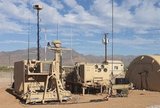
In a package worth $215 million, Qatar has requested NASAMS along with Advanced Medium Range Air-to-Air Missiles (AMRAAM) and related equipment and support. This includes 40 AIM 120C-7 AMRAAM missiles, one spare AIM 120C-7 AMRAAM guidance section, one spare AIM-120C-7 control section, eight AMRAAM captive air training missiles, missile containers, classified software for the AN/MPQ-64F1 Sentinel radar, cryptographic and communication security devices and precision navigation equipment.
The NASAMS capability would provide a full range of protection from hostile cruise missile, unmanned aerial vehicles, rotary wing and fixed wing threats.
If the sale goes ahead, the prime contractor and integrator will be Raytheon Missiles Systems.Related Equipment in Defence Insight


More from Land Warfare
-
![Polaris expands Arctic mobility offering as US military orders grow]()
Polaris expands Arctic mobility offering as US military orders grow
The Military 850 Voyageur 155 Crossover has secured orders from the US Army, Air Force and Marine Corps, addressing demand for agile Arctic mobility with passenger, cargo and towing capacity.
-
![More bidders move onto starting grid for British Army Land Rover replacement programme]()
More bidders move onto starting grid for British Army Land Rover replacement programme
The Light Mobility Vehicle segment of the UK’s Land Mobility Programme for the British Army may actually be about to make progress, or at least likely bidders seem to think so. Shephard spoke with several contenders who revealed their views on how the army should replace the ageing fleet.
-
![Northrop Grumman pushing ahead with smaller Integrated Battle Command System]()
Northrop Grumman pushing ahead with smaller Integrated Battle Command System
Northrop Grumman’s Integrated Battle Command System is in service with Polish forces and is being introduced to US forces, with further development underway on the original platform as well as a smaller, more mobile system.
-
![UK’s ground-based air defence effort remains in assessment phase after third industry day]()
UK’s ground-based air defence effort remains in assessment phase after third industry day
The UK’s plan to introduce a new air defence capability into the British Army will cover short and medium-range defence as well as counter-uncrewed aerial system systems. Timelines are not yet laid out but industry is making plans.