Vampire MRL sinks teeth into Indonesia
Indonesia's military set to receive multiple rocket launchers produced under licence in the country.


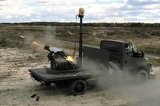
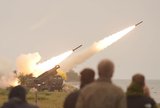
A Czech arms company is entering into joint production and technology transfer of the RM-70 M1 Vampire rocket launcher in Indonesia.
Excalibur Army signed the agreement with Indonesian firm PT Republik Defensindo at the IDEX 2021 exhibition on 22 February.
According to the agreement, production of the 122mm MRLs is set to commence in Batam, Indonesia, this year. The launchers will be based on Tatra truck chassis, with 4x4, 6x6 and 8x8 types all included.
Excalibur Army calls its 4x4, 6x6 and 8x8 rocket launchers the BM-21 MT, BM-21 MU and RM-70 Vampire respectively, according to its catalogue. All chassis
Already have an account? Log in
Want to keep reading this article?



More from Land Warfare
-
![Drone wars: countries are looking for answers but do companies have the solutions?]()
Drone wars: countries are looking for answers but do companies have the solutions?
Manufacturers are speeding up their counter-drone development efforts as countries increasingly focus on procurements to provide battlefield and national protection.
-
![Fourth company looks to Texelis Celeris chassis to develop a new 4x4 vehicle]()
Fourth company looks to Texelis Celeris chassis to develop a new 4x4 vehicle
Finnish company SCATA will use the Texelis Celeris chassis for a new vehicle similar to the Serval 4x4 which Texelis is building with KNDS France for the French Army.
-
![Thales Storm 2 counter-drone system being evaluated by potential customers]()
Thales Storm 2 counter-drone system being evaluated by potential customers
The attack drone threat from first-person view uncrewed aerial systems has been highlighted by recent conflicts and Thales has adapted its Storm 2 counter-improvised explosive device jammer to provide protection.
-
![Rolls-Royce to lead powertrain development for MGCS in important step for the programme]()
Rolls-Royce to lead powertrain development for MGCS in important step for the programme
The move signals significant progress for the delayed Franco-German Main Ground Combat System programme with first powerpack prototypes set to be tested before the end of the decade.