Drone wars: countries are looking for answers but do companies have the solutions?
L3Harris firing 70mm FZ275 laser-guided rockets from its Vampire CUAS is one of many recent developments in the field. (Photo: L3Harris)
Manufacturers are speeding up their counter-drone development efforts as countries increasingly focus on procurements to provide battlefield and national protection.


Developments in the Middle East in the past two weeks, centring on the US-Israeli attack on Iran and Iran’s retaliatory strikes on regional neighbours, have further highlighted the rise of the uncrewed aerial system (UAS) which was spotlighted in the Russia-Ukraine war.
Even before Russia’s full-scale invasion of Ukraine four years ago, counter-UAS (CUAS) capabilities were being developed by companies such as DroneShield in Australia and MARSS in the UK.
Israel’s Iron Dome, meanwhile, already had UAS defeat incorporated as part of a medium-tier to low-tier capability to combat rockets, mortars and small drones fired from neighbouring or nearby countries.
Related Articles
Estonia proposes Baltic Drone Wall to protect NATO’s eastern flank
AFA 2025: CUAS solutions demonstrate modularity and portability focus
US DoD task force’s DroneHunter acquisition lays groundwork for Replicator 2 CUAS strategy
Scandinavian and Baltic countries and others along NATO’s eastern flank have also been committing more funds to CUAS solutions since 2022, including proposals for a Baltic drone defence network and Poland’s own concept of a drone wall. Companies have been responding to this by pushing out new systems, which has been particularly prevalent over the past three months with firms either developing completely new designs or integrating existing sensors and weapons to create CUAS platforms.
New options rolled out
In February this year, Diehl Defence unveiled the Garmr CUAS vehicle at Enforce Tac, describing the system as “integrating new types of interceptor drones and an AI-supported detection and decision-making architecture”.
“It uses two interceptor drone technologies: Garmr short-range system using the Cicada interceptor drone with a catch net or warhead and Garmr medium-range system which additionally neutralises targets with innovative interceptor drones,” noted the manufacturer.
At the same exhibition, Rheinmetall revealed its RCWS320 CUAS remote-controlled weapon station which combines the SEOSS-320 vision system and the Dillon Aero M134D 7.62x51mm minigun. The SEOSS-320 has a two-axis stabilised sensor head with thermal imager third generation, high-resolution daylight CCD camera (optional), eye-safe laser range finder, integrated fire control and stabilisation electronics.
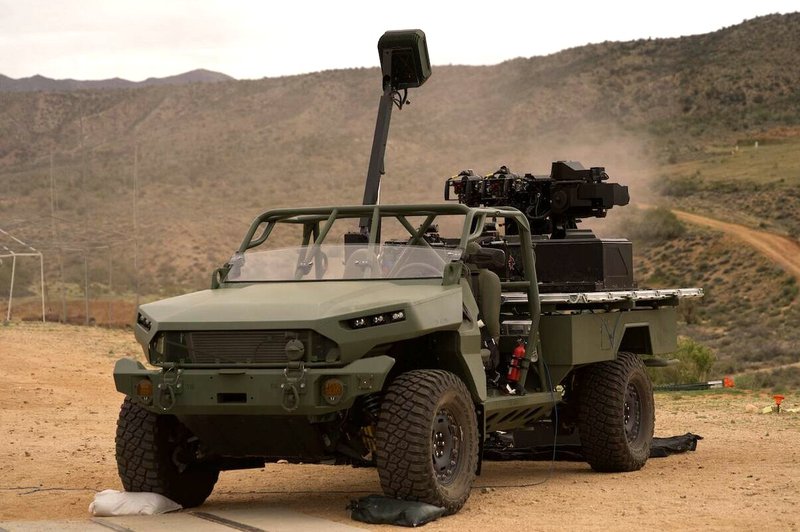
In mid-March, American Rheinmetall also announced it had recently demonstrated its CUAS Ultra-Short Range Air Defence (U-SHORAD) solution at the Big Sandy Range in Arizona.
According to the company, the live-fire exercise demonstrated integration of the system onto a GM Defense [infantry support vehicle - cargo, ISV-C] and “effective engagements against both fixed-wing and rotary-wing small UAS targets”.
U-SHORAD, which was unveiled at AUSA in 2025, consists of Oerlikon Skyranger 762 which uses twin M134D miniguns, EchoShield radar and multispectral sensors as a CUAS and against light ground targets. The system will now be used at the Concept Focused Warfighting Experimentation – Cross Domain Fires (CFWE-CDF) experimentation event set to take place in April at Fort Sill, Oklahoma.
At last month’s World Defense Show in Riyadh, Saudi Arabia, ST Engineering released more details on its Agil CUAS C2 system. Meanwhile, MARSS (Marine And Remote Sensing Solutions) unveiled a new version of its NiDAR C2 systems, dubbed Nation Shield, with a focus on CUAS.
Also in February, L3Harris Technologies announced it had integrated its Vampire CUAS system with Thales Belgium’s 70mm FZ275 laser-guided rocket as an option to defeat drones and ground targets.
The integration included a live-fire test at a military base in Poland as part of a series of events which included integration of L3Harris’s advanced Wescam MX-10D electro-optical/infrared targeting system and Widow mission management software.
Innovative solutions are on the rise
These and other new developments, such as Milrem Robotics signing a cooperation agreement with EOS Defence Systems in February, demonstrate industry confidence that there are opportunities in requirements to defeat UAS across drone types and sizes.
London-headquartered intellectual property (IP) law firm Mathys & Squire has noted the surge in the CUAS field. It revealed that the number of patent applications for CUAS technologies filed globally increased by 27% to 126 last year, up from 99 the year before. Research was conducted with a year-end of 31 March 2025.
While many of the systems noted so far turn to hard-kill systems for defence, according to company partner Andrew White, new technologies are leading the IP applications.
“We’re seeing innovation move beyond traditional approaches,” White said.
“Laser and microwave systems are gaining traction in the counter-drone market and this is likely just the beginning of a broader shift in how airspace threats are countered.”
Nations draw up defence plans against drone threats
Drone wall plans have been drawn up separately by Poland and a coalition of Baltic states, while the UK has added a CUAS capability to its ground-based air-defence procurement effort. The US also announced a consolidation of contracts with Anduril Industries on 13 March covering current and future solutions for CUAS capabilities up to a value of US$20 billion.
The Baltic Drone Wall project is spearheaded by Estonia, which shares a 324km border with Russia, along with fellow former Soviet states Latvia and Lithuania. The project would be part of a larger effort alongside Finland and Poland on these countries’ eastern borders.
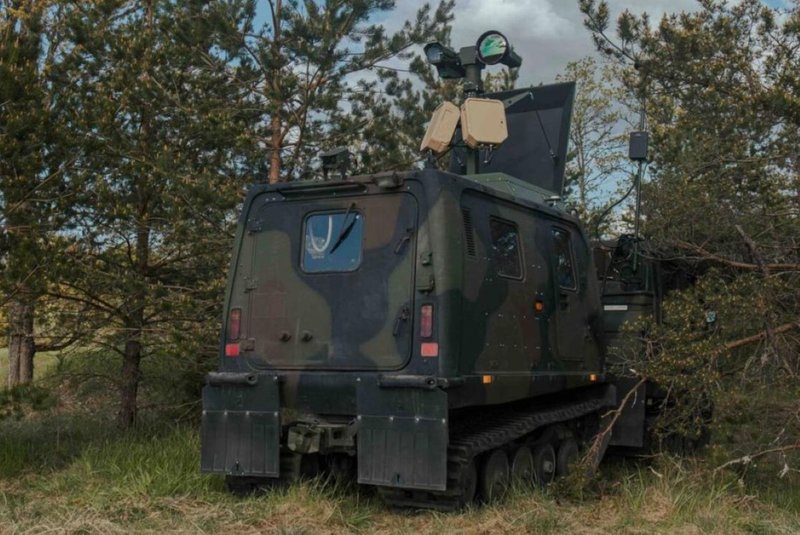
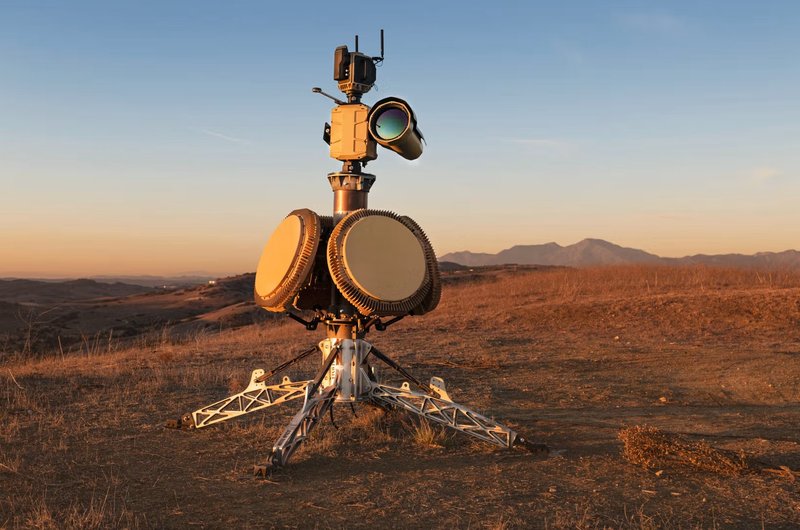
At the heart of the Baltic Drone Wall will be AI-powered software processing data from hundreds of acoustic, optical and radar sensors installed along the Baltic states’ borders with Russia. Part of the system would be relocatable with containerised sensor stations alongside mobile detecting vehicles.
Systems from Estonia’s DefSecIntel include SurveilSpire, Caiman, Eirshield and Euromite. More than 20 companies from Baltic states are involved.
The Baltic Drone Wall would likely cost more than €1 billion ($1.15 billion) for Latvia, Lithuania and Estonia but, according to a company official involved in the project, could be effective in 2027 “depending on funding and political imperative”.
In December last year, Poland announced that it had completed the first elements of its own drone wall along the Belarus border. At the time, Polish Foreign Minister Marcin Kervinskyi said that over the previous few months, five large observation towers had been built on the border with Belarus.
Kongsberg Defence & Aerospace and consortium partner Polska Grupa Zbrojeniowa (PGZ) signed a contract in January this year with the Polish Armaments Agency for the delivery of CUAS systems. The value of the order is about PLN15 billion ($4.23 billion) with deliveries expected to start this year for completion in 2028.
The CUAS system, designated San after a river which forms part of Poland’s border with Ukraine, consists of 18 batteries with 18 command platoons and 52 fire platoons. The entire San system will be hosted on 703 vehicles, including 400 units on the Jelcz platform and 300 on the Igwana chassis.
The batteries for San will include a wide variety of effectors, including 35mm, 30mm and 12.7mm guns, as well as missiles and interceptor drones and other CUAS defeat methods.
UK and US move on plans to improve CUAS capability
The UK is looking to create a Ground-Based Air Defence (GBAD) system-of-systems under the Land GBAD programme. According to solicitation documents, “it will provide capability to warn, inform, deter and defeat selected air threats (including aircraft, missiles, munitions and UAS”.
Capabilities to be delivered and enhanced by the Land GBAD programme include Short-Range Air Defence (SHORAD) and Medium-Range Air Defence (MRAD). It will also include Specialist CUAS (Spec-CUAS) for SHORAD and MRAD and All Arms Counter Small UAS (All Arms C-sUAS).
On 13 March, the UK MoD’s Defence Equipment and Support issued a preliminary market engagement notice to industry to provide information to meet the Spec-CUAS requirement.
The engagement notice states: “Spec-CUAS will be an armoured vehicle mounted cannon capability, that can defeat aerial threats in the forward and rear area of the battlespace at short range.
“It shall supplement SHORAD and MRAD, providing cost-effective layering and a multiple engagement capability [and be able to] operate in a stand-alone mode and be able to network with SHORAD and MRAD.”
Also on 13 March, the US Army Contracting Command awarded a $20 billion contract to Anduril Industries to consolidate current and future commercial solutions provided by the company. According to the US Department of Defense (DoD) contract announcement, this includes “the proprietary, open-architecture, AI-enabled Lattice suite, integrated hardware, data, computer infrastructure and technical support services”.
According to Brig Gen Matt Ross, director of the US Army’s Joint Interagency Task Force 401 (JIATF 404): “This enterprise contract is a critical step in establishing a common framework for [CUAS] interoperability.
“It provides a foundational command and control capability. The [DoD] and interagency partners now possess a clear path to a cohesive and operationally effective ecosystem that gives our warfighters the most advanced tools to defend the homeland.”
Earlier this month, JIATF 404 released a guidance document titled ‘Counter-UAS Operations: Safeguarding Freedoms and Preserving Privacy’, explaining the sensor technologies used to detect and identify drone threats and the legal framework that governs their use.
Ross said the document highlighted that “countering drones is not just a battlefield problem — it’s a homeland defence imperative.
“Our goal is to integrate sensors, effectors and mission command systems in a distributed network that protects service members and American citizens alike.”
Purpose-built and opportunity-driven solutions
The development of the Baltic Drone Wall is partially driven by industry, particularly that of Estonia, which has identified a national need. The Polish extension of the system, meanwhile, and the companies’ responses, has been propelled by political statements and events.
Standalone platform units, such as Garmr or Rheinmetall’s ISV-C- mounted U-SHORAD, have been developed in response to an expected possible battlefield need and, in the case of the latter, to compete in field trials.
Estonian industry has been at the forefront of CUAS and UAS innovation – relative to its size – out of need and because smart technology, rather than large equipment manufacture, is more possible in a country with a small population and urgent requirements in the face of its neighbour, Russia.
With hundreds of CUAS systems of varying types and effectors, ranging from jammers to interceptors to ammunition, it is impossible that all will be fielded and it is uncertain, in a changing battlespace, which will be most widely used. However, systems which are already extensively deployed and proven with a lower effect cost, such as DroneShield’s DroneGun, are likely to continue to see high demand, while large, funded national programmes to meet urgent defence requirements are also expected to continue.

You may also like
More from Land Warfare
-
![Europe commits to long-range fires but countries move in different directions]()
Europe commits to long-range fires but countries move in different directions
Sweden, Croatia and France are pursuing different rocket artillery solutions as European armies seek greater reach, survivability and industrial resilience.
-
![MAAF to test Britain’s shift from armour to distributed lethality in Estonia]()
MAAF to test Britain’s shift from armour to distributed lethality in Estonia
The bilateral agreement between the UK and Estonia comes as both countries explore how dispersed troops, drones, digital targeting, anti-tank weapons and increasingly long-range fires can complement the combat mass traditionally provided by heavy armour.
-
![Polaris expands Arctic mobility offering as US military orders grow]()
Polaris expands Arctic mobility offering as US military orders grow
The Military 850 Voyageur 155 Crossover has secured orders from the US Army, Air Force and Marine Corps, addressing demand for agile Arctic mobility with passenger, cargo and towing capacity.
-
![More bidders move onto starting grid for British Army Land Rover replacement programme]()
More bidders move onto starting grid for British Army Land Rover replacement programme
The Light Mobility Vehicle segment of the UK’s Land Mobility Programme for the British Army may actually be about to make progress, or at least likely bidders seem to think so. Shephard spoke with several contenders who revealed their views on how the army should replace the ageing fleet.
-
![Northrop Grumman pushing ahead with smaller Integrated Battle Command System]()
Northrop Grumman pushing ahead with smaller Integrated Battle Command System
Northrop Grumman’s Integrated Battle Command System is in service with Polish forces and is being introduced to US forces, with further development underway on the original platform as well as a smaller, more mobile system.
-
![UK’s ground-based air defence effort remains in assessment phase after third industry day]()
UK’s ground-based air defence effort remains in assessment phase after third industry day
The UK’s plan to introduce a new air defence capability into the British Army will cover short and medium-range defence as well as counter-uncrewed aerial system systems. Timelines are not yet laid out but industry is making plans.