Long-running Brazilian anti-vehicle missile programme approaches end of tests


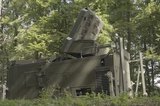
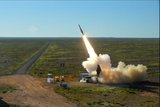
The Brazilian Army will conclude tests this year of a pilot batch of its 1.2 Anti-Vehicle Surface-Surface Missile System (MSS 1.2 AC).
This system has been developed by the army’s Technological Centre (CTEx) and its Assessment Centre (CAEx), in partnership with the Brazilian company SIATT (previously called Mectron), to provide enhanced protection against armoured vehicles and high firepower capacity.
The MSS 1.2 AC has a range of up to 2,000m. The 1.38m-long missile uses a laser beam-riding guidance system and can penetrate up to 600mm of Rolled Homogeneous Armour equivalent (RHAe). The system is operated by a crew of two
Our news & analysis is now part of Defence Insight®
A Basic-level or higher Defence Insight subscription is now required to view this content.


More from Land Warfare
-
![Europe’s eastern flank moves on air defence radars with wider efforts also underway]()
Europe’s eastern flank moves on air defence radars with wider efforts also underway
Air defence radars have become more important assets in the past year with incursions in NATO countries on Europe’s eastern flank highlighting the need.
-
![Australia’s SM-2 land trial could reshape ADF medium-range air defence plans]()
Australia’s SM-2 land trial could reshape ADF medium-range air defence plans
The first ground launch of the SM-2 could offer Canberra a path to expand its missile defence capability by adapting systems already fielded across the ADF.
-
![New teams form to compete for British Army Land Rover replacement]()
New teams form to compete for British Army Land Rover replacement
The UK’s Land Mobility Programme Light Mobility Vehicle requirement is designed to replace the British Army’s ageing fleet of Land Rovers with a vehicle with a Gross Vehicular Mass of less than 3,500kg. It could be for as many as 6,000 vehicles.