PERM testing validates functionality and performance
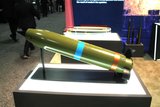
Raytheon has conducted test firings of its Precision Extended Range Munition (PERM) guided projectile to validate the system’s functionality and performance. The company reported news of the firings on 2 December.
Four PERM GPS-guided projectiles were fired from the US Marine Corps M327 120mm Rifled Towed Mortar, with three rounds flying to the required range and hitting within the required distance of their targets; and the fourth fired to the minimum range requirement and impacting a few metres from an off-axis target. According to Raytheon the four rounds met all test objectives.
Tom Bussing, vice president advanced missile systems, Raytheon, said: ‘These firings, combined with earlier environmental lab and integration tests, demonstrate PERM’s maturity. The testing also shows the high level of integration between the munition’s guidance, navigation and control functions.’
PERM is designed to provide US Marines with a lethal, extended range, high probability one-shot capability. The munition is a key capability of the US Marine Corps Expeditionary Fire Support System (EFSS) - a close support, all weather, quick response indirect fire system.
The system has been jointly developed by Raytheon and Israeli Military Industries. The two companies are expected to deliver 42 PERM rounds to the US Marine Corps for additional testing later this year.




More from Land Warfare
-
![With changing patterns in Middle Eastern procurement, is Europe missing out?]()
With changing patterns in Middle Eastern procurement, is Europe missing out?
Traditional suppliers are struggling to meet the Middle East’s armoured vehicle modernisation needs, creating opportunities for South Korean manufacturers and regional defence industries.
-
![AUSA 2026: CUAS market expands as suppliers target new threats and operational requirements]()
AUSA 2026: CUAS market expands as suppliers target new threats and operational requirements
New developments from MARSS, MyDefence, Mountain Horse Solutions and Rafael suggest that future counter-drone protection will increasingly depend on combining advanced detection, rapid interception and integrated defensive networks.
-
![Integrated approach: transforming vehicle communications for a new era of warfare]()
Integrated approach: transforming vehicle communications for a new era of warfare
In the modern battlespace, military intercom systems can no longer operate in isolation. They must instead be integrated with the wider tactical network, gaining operational advantages through secure communications with dismounted soliders and other assets across domains.