Oshkosh submits Robotic Combat Vehicle proposal
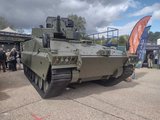
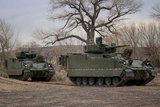
Oshkosh's proposal has been developed with Pratt Miller and QinetiQ. (Photo: Oshkosh)
Oshkosh has submitted its response to the US Army’s request for prototype proposals for the platform prototype design and build phase of its Robotic Combat Vehicle (RCV) programme.


Based on evaluations, up to four vendors could be selected by the US Army to build RCV prototypes by August 2024.
Oshkosh said its solution, developed with Pratt Miller Defense and QinetiQ, provided the ‘most mature and established’ RCV solution leveraging ‘leading-edge’ technology and manufacturing excellence.
Oshkosh chief programmes officer Pat Williams said: ‘The Oshkosh Defense RCV team is pleased to submit our proposal for Phase 1 of the RCV programme.
Related Articles
Academia teams with US Army on robotic combat vehicle research
US Army orders over 400 Oshkosh tactical vehicles
BAE Systems lands three-year US Army contract for precision weapons R&D
‘We remain committed to being responsive to the needs and requirements of the soldier to provide the most capable, reliable, and maintainable robotic platform.’
He added that the solution offered was ‘optimised’ to exceed performance requirements and was ready to meet the US Army’s programme schedule.
Related Programmes in Defence Insight
Related Equipment in Defence Insight


More from Land Warfare
-
![Air defence offerings multiply in anticipation of emerging requirements]()
Air defence offerings multiply in anticipation of emerging requirements
Air defence and counter-drone weapons continue to be developed, tested and demonstrated in anticipation of growing demand, with most solutions designed to be platform-agnostic and readily integrated onto suitable platforms.
-
![FNSS advances Indonesian Kaplan APC programme as local production expands]()
FNSS advances Indonesian Kaplan APC programme as local production expands
FNSS and PT Pindad are progressing the Indonesian tracked armoured personnel carrier programme as local production gets under way.
-
![Tulpar firing trials expand Hitfact Mk II platform options]()
Tulpar firing trials expand Hitfact Mk II platform options
Firing trials of the Tulpar and Leonardo Hitfact Mk II combination follow an integration programme covering mechanical, electrical, electronic and software interfaces.