


Companies downselected for British Army vehicle programme
It is believed that three companies did not make the downselect but a dark horse in Spain’s Iturri is believed to have got through.


Northrop Grumman and the US Navy have successfully completed the Critical Design Review (CDR) for increment one of the Advanced Explosive Ordnance Disposal Robotic System (AEODRS) programme, the company announced on 7 June.
Under the CDR, a team of government experts, managers and US Marine Corps and US Navy users conducted an assessment of the system to ensure that its final design for the dismounted operations variant is technically and programmatically realistic.
The successful CDR indicates that the final design meets the mission performance, schedule and cost requirements and that the programme is ready to proceed with system fabrication, assembly, integration and testing.
AEODRS increment one is the dismounted operations system developed for EOD reconnaissance and threat assessment. It is a back-packable system weighing below 35lbs and comprising of a communications link and handheld operator control unit. It also consists of a master, power, effector, manipulator, end effector, visual sensors and autonomous behaviours capability module.
A family of unmanned ground vehicle systems will be created under the AEODRS programme.
Dan Verwiel, vice president and general manager, missile defense and protective systems division, Northrop Grumman Mission Systems, said: ‘The successful CDR so soon after contract award clearly shows the commitment of the navy and Northrop Grumman team to fill this key gap for EOD robotic operations. We will continue our close collaboration with the navy and user communities to ensure the delivery of a quality system that meets navy requirements.’


It is believed that three companies did not make the downselect but a dark horse in Spain’s Iturri is believed to have got through.
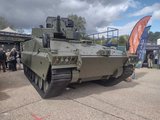
Air defence and counter-drone weapons continue to be developed, tested and demonstrated in anticipation of growing demand, with most solutions designed to be platform-agnostic and readily integrated onto suitable platforms.
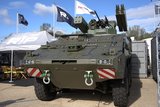
The US Army began its search for a 155mm tracked mobile tactical cannon in an effort that Shephard forecasts could be worth billions of dollars. Meanwhile, the UK DVD exhibition saw companies showcase their offerings for the British Army’s mobility and air defence requirements.
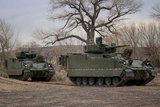
The development demonstrates how the platform could provide additional firepower and growth potential while the US Army progresses its long-term replacement for the Bradley.
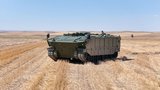
FNSS and PT Pindad are progressing the Indonesian tracked armoured personnel carrier programme as local production gets under way.
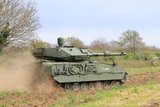
Firing trials of the Tulpar and Leonardo Hitfact Mk II combination follow an integration programme covering mechanical, electrical, electronic and software interfaces.

Connect with us on socials


