New Supacat vehicles add off-road recovery capability for British Army
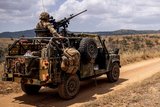
The 6x6 Coyote LWRV can be converted from a 4x4 Jackal 2 by adding an extra axle unit and a dedicated recovery module. (Photo: Supacat/NP Aerospace)
Based on the 4x4 Jackal 2, the modular 6x6 Coyote Lightweight Recovery Vehicle package permits off-road recovery of light tactical vehicles in challenging environments.


NP Aerospace, engineering authority for the UK MoD protected mobility fleet, and Supacat, are progressing development of new Lightweight Recovery Vehicles (LWRVs) for the British Army.
Four Supacat LWRV vehicles are due to be released to the service in Spring 2023, meeting a requirement for off-road recovery capability in environments such as those seen in Mali during Operation Newcombe.
The development falls under the MoD’s Protected Mobility Engineering & Technical Support (PMETS) contract led by NP Aerospace and contracted vehicle OEMs and partners.
The LWRV utilises four in-service Jackal 2 vehicles with the addition of Supacat’s Extenda removable third axle to provide the recovery module and configure the 4x4 Jackal 2 as a 6x6 Coyote.
The design solution also incorporates Supacat’s Supalift system that will allow the recovery of Foxhound and HMT platforms.
The modular design allows LWRVs to switch between Jackal 2 and Coyote configuration by respective removal or addition of the recovery module.
David Petheram, COO, NP Aerospace, said: ‘The project has received great feedback and we look forward to delivering the capability over the coming weeks.’

You may also like
More from Land Warfare
-
![Hanwha debuts with US Army deal worth up to $3.6 billion as it eyes future M109 replacement]()
Hanwha debuts with US Army deal worth up to $3.6 billion as it eyes future M109 replacement
The Mobile Tactical Cannon is to replace the US Army’s M777 towed howitzers which could result in the procurement of almost 500 systems at an estimated $3.59 billion.
-
![US pours another $23 billion into Arsenal of Freedom to ramp up missile production]()
US pours another $23 billion into Arsenal of Freedom to ramp up missile production
The US Department of Defense (DoD) is spending billions of dollars to accelerate missile production to meet demands from the war against Iran and requirements in Ukraine. Manufacture of SM-3 and PAC-3 interceptors is being ramped up, alongside a $22.9 billion commitment to Tomahawk cruise missiles.
-
![Rheinmetall advances longer 155mm ordnance with 30% range increase]()
Rheinmetall advances longer 155mm ordnance with 30% range increase
Rheinmetall has begun initial firing trials of a new 155mm/60-calibre artillery ordnance that could deliver up to 30% greater range than its existing 155mm/52-calibre system, as production of the current gun expands across Germany and the UK.
-
![Trans-European iMUGS2 uncrewed systems programme set for three-day exercise in 2028]()
Trans-European iMUGS2 uncrewed systems programme set for three-day exercise in 2028
The next stage of the Integrated Modular Unmanned Ground System (iMUGS) programme, dubbed iMUGS2, was launched in November 2025. Three major demonstrations are planned before the end of 2028.
-
![British Army Land Rover replacement plan inches forward]()
British Army Land Rover replacement plan inches forward
The UK Ministry of Defence has proposed a selection date of May 2027 for the Land Rover replacement requirement, with deliveries expected through to 2036. Next month’s DVD exhibition will be a key shop window for bidders.