Navistar Defense wins MaxxPro award


Navistar Defense has announced that it will provide 650 independent suspension kits to the US Marine Corps’ for its International MaxxPro Plus Mine Resistant Ambush Protected (MRAP) vehicles. The contract, worth $110 million, was placed by the US Marine Corps System Command order, and will enhance the mobility and survivability of earlier MaxxPro vehicles with the addition of the DXM independent suspension kits.
Fielded in 2008, MaxxPro Plus units have been deployed in Iraq and Afghanistan and have performed admirably in austere conditions. The current upgrades will increase the capability of this proven platform.
According to the company, this award complements the 2,717 MaxxPro rolling chassis upgrade order Navistar received earlier this month. The combination of these two awards ensures commonality and mobility within the MaxxPro fleet.
Installation of these kits will be performed at the MRAP Sustainment Facility in Kuwait. Work will begin in August 2012 and is expected to be completed by the end of October 2012.



More from Land Warfare
-
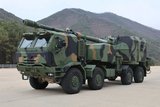
![AUSA 2026: Hanwha receives howitzer top-up order to meet US Army’s fast delivery demand]()
AUSA 2026: Hanwha receives howitzer top-up order to meet US Army’s fast delivery demand
Less than two months after winning a contract from the US Army for six prototype K9 mobile howitzers, Hanwha Defense USA has received an order for another three. The company will show a platform at AUSA 2026.
-
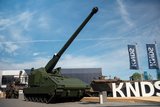
![KNDS points RCH 155 towards longer-range artillery future]()
KNDS points RCH 155 towards longer-range artillery future
KNDS Deutschland has fitted a tracked RCH 155 with a new KNDS France 155mm/58cal ordnance, opening a potential path towards significantly longer-range artillery and a future beyond the current NATO standard.
-
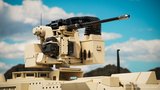
![Companies downselected for British Army vehicle programme]()
Companies downselected for British Army vehicle programme
It is believed that three companies did not make the downselect but a dark horse in Spain’s Iturri is believed to have got through.