Modified Msta-S and Orlan-10E go through their paces
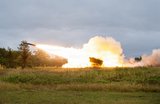
The 2S19M1-155 fired at a maximum range of 40km in a recent demonstration. (Photo: Rosoboronexport)
Russia hosts another demonstration of the 2S19M1-155 self-propelled howitzer and Orlan-10E UAV for ‘representatives of a foreign customer’.


Russian defence conglomerate Rostec announced on 19 April that ‘representatives of a foreign customer’ witnessed a recent joint demonstration of the 2S19M1-155 (a Msta-S self-propelled howitzer adapted to fire NATO-standard 155mm ammunition) and the Orlan-10E reconnaissance UAV.
A similar demonstration was held for unnamed Middle Eastern customers in March 2020.
During the latest event at the Staratel training ground in Nizhny Tagil, Msta-S ‘showed excellent coordination capabilities with the UAV’, Rostec noted.
The 2S19M1-155 fired at a maximum range of 40km with laying recovery in automatic mode.
‘Msta-S has also shown excellent results when used in coordination with a control system and Orlan-10E UAV,’ Rostec added.
According to Shephard Defence Insight, the 2S19M1-155 variant carries 42 155 mm projectiles (including eight in an automatic loader) and incorporates automotive components from the T-90.
As part of our promise to deliver comprehensive coverage to our Defence Insight and Premium News subscribers, our curated defence news content provides the latest industry updates, contract awards and programme milestones.
Related Equipment in Defence Insight


More from Land Warfare
-
![Front-line support: how UK industry is helping tackle Ukraine’s landmine challenges]()
Front-line support: how UK industry is helping tackle Ukraine’s landmine challenges
Pearson Engineering has provided equipment and engineering expertise to the Armed Forces of Ukraine since the beginning of the full-scale Russian invasion in 2022. The British company is now working to deepen engagement with the Ukrainian defence industry, expanding its support for the country’s population and laying the foundations for future technological innovation.
-
![AUSA 2026: industry looks to make commercial platforms a military reality]()
AUSA 2026: industry looks to make commercial platforms a military reality
With a production rate of more than 10 million vehicles annually, the US commercial car and vehicle manufacturing base is second only to China. Defence companies are looking at how the vehicles, technology and manufacturing capability can support programmes.
-
![With changing patterns in Middle Eastern procurement, is Europe missing out?]()
With changing patterns in Middle Eastern procurement, is Europe missing out?
Traditional suppliers are struggling to meet the Middle East’s armoured vehicle modernisation needs, creating opportunities for South Korean manufacturers and regional defence industries.
-
![AUSA 2026: CUAS market expands as suppliers target new threats and operational requirements]()
AUSA 2026: CUAS market expands as suppliers target new threats and operational requirements
New developments from MARSS, MyDefence, Mountain Horse Solutions and Rafael suggest that future counter-drone protection will increasingly depend on combining advanced detection, rapid interception and integrated defensive networks.