Missile production being boosted across three continents
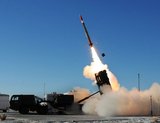
The test firing means full-rate production of Australian-made NSM launchers can begin. (Photo: Kongsberg)
The demand for missiles reflects current strategic interests, such as those in the Indo-Pacific region and conflict in Europe, along with an expectation of local involvement in manufacture which also supports a drive to build capacity.


The past three months has seen a surge in work to expand air defence and land attack missiles with soil turned on two sites, one in Australia and one in Europe, and plans announced for a facility in the US.
At the same time, Australia has this week conducted the first test-firing of a Naval Strike Missile (NSM) using a locally-made launcher and earlier in the month began the process to buy vehicle-mounted land-based, long-range fires.
The new Kongsberg facilities in Newcastle, Australia, where construction began on 6 December, and the planned factory James City County, Virginia in the US,
Our news & analysis is now part of Defence Insight®
A Basic-level or higher Defence Insight subscription is now required to view this content.



More from Land Warfare
-
![Rheinmetall advances longer 155mm ordnance with 30% range increase]()
Rheinmetall advances longer 155mm ordnance with 30% range increase
Rheinmetall has begun initial firing trials of a new 155mm/60-calibre artillery ordnance that could deliver up to 30% greater range than its existing 155mm/52-calibre system, as production of the current gun expands across Germany and the UK.
-
![Boxer lands another order as contracts and opportunities build momentum]()
Boxer lands another order as contracts and opportunities build momentum
As Germany prepares its €25 billion order under the Arminius framework – the biggest Boxer procurement to date – the platform could become an increasingly powerful contender in European competitions.
-
![Trans-European iMUGS2 uncrewed systems programme set for three-day exercise in 2028]()
Trans-European iMUGS2 uncrewed systems programme set for three-day exercise in 2028
The next stage of the Integrated Modular Unmanned Ground System (iMUGS) programme, dubbed iMUGS2, was launched in November 2025. Three major demonstrations are planned before the end of 2028.
-
![British Army Land Rover replacement plan inches forward]()
British Army Land Rover replacement plan inches forward
The UK Ministry of Defence has proposed a selection date of May 2027 for the Land Rover replacement requirement, with deliveries expected through to 2036. Next month’s DVD exhibition will be a key shop window for bidders.