


Companies downselected for British Army vehicle programme
It is believed that three companies did not make the downselect but a dark horse in Spain’s Iturri is believed to have got through.


Milrem’s THeMIS UGV. (Photo: Milrem.)
During recent autonomy demonstrations, a THeMIS UGV from Milrem Robotics followed a human operator walking a path featuring obstacles.
In another, an operator-controlled one UGV and set a second vehicle to follow it between two waypoints. The second THeMIS was then commanded to turn back using Milrem’s Intelligent Functions Integration Kit’s (MIFIK) Mission Planner.
En route, an operator stepped into the path of the UGV, triggering is obstacle detection sensors, bringing the vehicle to a stop. After the obstruction was cleared, the UGV continued on its way.
Milrem Robotics defence R&D director Jüri Pajuste said: ‘Intelligent functions are a crucial part of unmanned systems as they allow soldiers to concentrate on their mission rather than focusing on operating the system.
‘Unmanned ground systems with follow-me, return home, and point-to-point navigation functionalities considerably enhance the fighting capability of units,’
Milrem CEO Kuldar Väärsi said MIFIK would be delivered to ‘several’ THeMIS operators this year. From 2022, certified autonomous functions would form part of the basic THeMIS configuration.
During the broader iMUGS demonstration, project partners showcased THeMIS deploying alongside the KMW Boxer APC and a tethered UAS.
Seven EU member states, Estonia, Belgium, Finland, France, Germany, Latvia, and Spain, set the requirements for iMUGS.


It is believed that three companies did not make the downselect but a dark horse in Spain’s Iturri is believed to have got through.
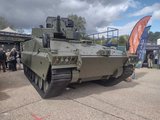
Air defence and counter-drone weapons continue to be developed, tested and demonstrated in anticipation of growing demand, with most solutions designed to be platform-agnostic and readily integrated onto suitable platforms.
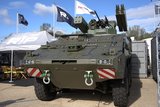
The US Army began its search for a 155mm tracked mobile tactical cannon in an effort that Shephard forecasts could be worth billions of dollars. Meanwhile, the UK DVD exhibition saw companies showcase their offerings for the British Army’s mobility and air defence requirements.
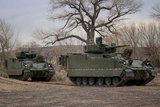
The development demonstrates how the platform could provide additional firepower and growth potential while the US Army progresses its long-term replacement for the Bradley.
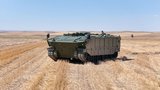
FNSS and PT Pindad are progressing the Indonesian tracked armoured personnel carrier programme as local production gets under way.
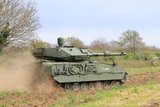
Firing trials of the Tulpar and Leonardo Hitfact Mk II combination follow an integration programme covering mechanical, electrical, electronic and software interfaces.

Connect with us on socials


