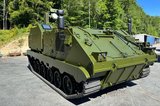
Lockheed Martin receives MLRS follow-on order


Lockheed Martin has received a $353.2 million US Army follow-on contract for the seventh production lot of Guided Multiple Launch Rocket System (GMLRS) Unitary rockets, it has been announced.
Designed for destroying targets at ranges up to 70 km, GMLRS is an all-weather, rapidly deployable, long-range rocket that delivers precision strike beyond the range of most conventional weapons.
According to Lockheed Martin, GMLRS Unitary rockets have achieved a combat-reliability rate of 98% and have established a ‘reputation for affordability’.
Rockets from this production lot will be supplied to the US Army and US Marine Corps, and to the armies of Italy, Jordan and Singapore, with the contract representing Italy’s first purchase of GMLRS rockets. Deliveries are scheduled to begin in December 2013.
‘GMLRS continues to be the long-range precision-fire weapon of choice when commanders need to decisively and accurately attack high value targets while minimizing the risk of collateral damage,’ Lt Col TJ Wright, the US Army’s product manager for precision guided missiles and rockets, said in a 19 July statement.
‘This contract award will result in the delivery of a critical capability to our warfighters who rely on GMLRS to deliver all-weather, 24/7 responsive fires when they need it most.’
US and allied forces have already fired more than 2,200 of the precision munitions in support of military operations.
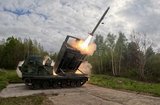
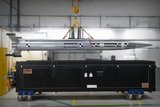
Each GMLRS rocket is packaged in an MLRS launch pod and is fired from the Lockheed Martin HIMARS or M270 family of launchers. The longer-range GMLRS+ rocket, with a reach of more than 120km, is being developed and tested by Lockheed Martin using company funds.


More from Land Warfare
-
![“Timelines are measured in seconds”: tackling the UAS threat with dispersed defences]()
“Timelines are measured in seconds”: tackling the UAS threat with dispersed defences
Small uncrewed aerial systems (UAS) have transformed the battlespace, posing a complex threat across all domains. Militaries now need counter-UAS (CUAS) capabilities that defeat the danger while meeting demands around readiness, manoeuvrability and adaptability, according to Mike Spina, Director, Global Sales and Business Development for Targeting and Sensor Systems (TSS) at L3Harris Technologies.
-
![“No single technology is enough”: why an integrated approach to uncrewed warfare is essential]()
“No single technology is enough”: why an integrated approach to uncrewed warfare is essential
In Conversation… Ahmet Akyol, CEO of ASELSAN, talks to Shephard’s Gerrard Cowan about how the rapid evolution of uncrewed aerial systems (UAS) is transforming the battlespace, with militaries focused on both deploying these platforms to maximum effect and developing the defensive systems needed to counter them.
-
![Lasers heat up for counter-drone option as DroneLight tackles the big question]()
Lasers heat up for counter-drone option as DroneLight tackles the big question
Using lasers to defeat drones promises to solve the dilemma of using expensive kinetic effects to kill platforms worth a few hundred dollars. While maintaining thermal output to provide the effects can be a technical hurdle, Israel’s Esh-Tech is one company working on a solution.