Lockheed Martin lands US Army US$9.8 billion Patriot contract
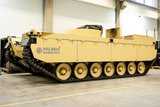
The Patriot interceptor is operated by 17 nations globally. (Photo: Lockheed Martin)
The contract will be used to produce 1,970 Patriot Advanced Capability (PAC-3 MSE) interceptors and hardware.


The US Army has awarded Lockheed Martin the biggest contract in the company’s Missile and Fire Control business arm history for the Patriot Advanced Capability – 3 Missile Segment Enhancements (PAC-3 MSE).
With the US$9.8 billion order for the PAC-3, Lockheed is expected to produce 1,970 interceptors.
Shephard Defence Insight noted that the PAC-3 is a long-range, medium- to high-altitude, all-weather air defence missile designed to counter tactical ballistic missiles, cruise missiles and advanced aircraft.
The MSE version is fitted with upgraded capabilities, including a two-pulse solid rocket motor, to enhance its performance in altitude and range.
Jason Reynolds, vice
Already have an account? Log in
Want to keep reading this article?

More from Land Warfare
-
![UN “not fulfilling core tasks” for Ukraine, says Estonian defence secretary]()
UN “not fulfilling core tasks” for Ukraine, says Estonian defence secretary
Estonia is looking for innovative ways to deal with its particular challenges but, according to the MoD’s permanent secretary, Kaimo Kuusk, technology still needs to be backed up by old-fashioned long-range punch.
-
![Why Middle Eastern markets demand bespoke AFV solutions]()
Why Middle Eastern markets demand bespoke AFV solutions
In this expert analysis, Christopher Foss looks at how armoured vehicle suppliers to the Middle East are increasingly tailoring platforms for the region’s specific operational requirements.
-
![Swiss Army still awaits new artillery contract to replace M109 howitzers]()
Swiss Army still awaits new artillery contract to replace M109 howitzers
More than a year after selecting the KNDS Artillery Gun Module mounted on the Piranha IV 8x8 as its next artillery system, Switzerland is still awaiting the contract that will deliver the guns.
-
![Milrem outlines plans for Havoc and Vector as Ukrainian THeMIS numbers set to double]()
Milrem outlines plans for Havoc and Vector as Ukrainian THeMIS numbers set to double
Milrem’s THeMIS uncrewed ground vehicle is one of the most battle-proven medium UGV platforms in service, with the company looking to have production versions of new large platforms ready before the end of the decade.
-
![Localisation is the aim of the game in defence procurement]()
Localisation is the aim of the game in defence procurement
Defence buyers globally are increasingly looking to tie domestic manufacturing and technology transfer into deals.