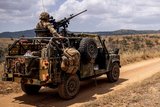
Lithuania stocks up on Saab RBS 70 missiles
The Lithuanian Defence Materiel Agency has signed a four-year contract with Saab for additional RBS 70 air defence missiles.
Saab has signed a four-year contract with the Lithuanian Defence Materiel Agency, which allows the customer to place orders for RBS 70 missiles until 2026. An initial purchase under the new contract has been placed, worth SEK 350 million ($32 million). Deliveries will take place from 2023-2024.
Lithuania has been a user of the RBS 70 ground-based air defence missile system since 2004.
“’Our best-in-class short-range air defence missiles deliver a tactical advantage. The recent contract will further strengthen Lithuania’s air defence capability through the RBS 70 system,’ said Görgen Johansson, head of Saab Dynamics.
Shephard Defence Insight lists Lithuania as having taken delivery of 260 RBS 70 missiles and estimates the unit cost at $100,000. Fellow Baltic nations Latvia and Finland also operate the Saab air defence system. Lithuania’s medium-range air defence layer is provided by the Kongsberg NASAMS system and the country signed a letter of intent to join the Europe-wide Sky Shield initiative earlier this month.
Related Equipment in Defence Insight



More from Land Warfare
-
![Hanwha debuts with US Army deal worth up to $3.6 billion as it eyes future M109 replacement]()
Hanwha debuts with US Army deal worth up to $3.6 billion as it eyes future M109 replacement
The Mobile Tactical Cannon is to replace the US Army’s M777 towed howitzers which could result in the procurement of almost 500 systems at an estimated $3.59 billion.
-
![Rheinmetall advances longer 155mm ordnance with 30% range increase]()
Rheinmetall advances longer 155mm ordnance with 30% range increase
Rheinmetall has begun initial firing trials of a new 155mm/60-calibre artillery ordnance that could deliver up to 30% greater range than its existing 155mm/52-calibre system, as production of the current gun expands across Germany and the UK.
-
![Boxer lands another order as contracts and opportunities build momentum]()
Boxer lands another order as contracts and opportunities build momentum
As Germany prepares its €25 billion order under the Arminius framework – the biggest Boxer procurement to date – the platform could become an increasingly powerful contender in European competitions.
-
![Trans-European iMUGS2 uncrewed systems programme set for three-day exercise in 2028]()
Trans-European iMUGS2 uncrewed systems programme set for three-day exercise in 2028
The next stage of the Integrated Modular Unmanned Ground System (iMUGS) programme, dubbed iMUGS2, was launched in November 2025. Three major demonstrations are planned before the end of 2028.
-
![British Army Land Rover replacement plan inches forward]()
British Army Land Rover replacement plan inches forward
The UK Ministry of Defence has proposed a selection date of May 2027 for the Land Rover replacement requirement, with deliveries expected through to 2036. Next month’s DVD exhibition will be a key shop window for bidders.