Krauss-Maffei Wegmann, Elbit capture German MLRS zeitgeist with cooperation MoU
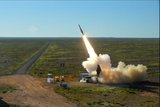
Elbit could provide long-range precision-guided rockets, as used in its Precise and Universal Launching System, to help Germany upgrade its MARS II/MLRS-E system. (Photo: Elbit)
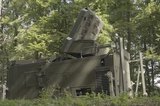
Krauss-Maffei Wegmann and Elbit agree to cooperate on enhancing the MARS II/MLRS-E multiple launch rocket system, tapping into an existing modernisation plan in Germany.


Interest from European militaries in precision-strike multiple launch rocket systems (MLRSs) has surged in recent weeks amid the successful use of US-donated HIMARS units by Ukraine against Russian targets.
This was underlined on 29 July, when Krauss-Maffei Wegmann (KMW) and Elbit Systems announced an MoU to ‘further expand their strategic cooperation’.
KMW will work with Elbit Systems Deutschland and Elbit Systems Land to support the modernisation of the German Medium Artillery Rocket System II (MARS II), also known as MLRS-E.
‘In this context, Elbit will provide a modern active agent portfolio so that the requirements of MLRS users can be
Our news & analysis is now part of Defence Insight®
A Basic-level or higher Defence Insight subscription is now required to view this content.



More from Land Warfare
-
![Europe’s eastern flank moves on air defence radars with wider efforts also underway]()
Europe’s eastern flank moves on air defence radars with wider efforts also underway
Air defence radars have become more important assets in the past year with incursions in NATO countries on Europe’s eastern flank highlighting the need.
-
![Australia’s SM-2 land trial could reshape ADF medium-range air defence plans]()
Australia’s SM-2 land trial could reshape ADF medium-range air defence plans
The first ground launch of the SM-2 could offer Canberra a path to expand its missile defence capability by adapting systems already fielded across the ADF.
-
![New teams form to compete for British Army Land Rover replacement]()
New teams form to compete for British Army Land Rover replacement
The UK’s Land Mobility Programme Light Mobility Vehicle requirement is designed to replace the British Army’s ageing fleet of Land Rovers with a vehicle with a Gross Vehicular Mass of less than 3,500kg. It could be for as many as 6,000 vehicles.