


Canada accelerates uncrewed aerial system procurement for NATO and Arctic forces
Canada plans to acquire at least 120 uncrewed aerial systems through two competitions with combined funding ceilings of C$32 million.


ITT Exelis will produce additional Spiral Enhanced Night Vision Goggles (SENVG), designated AN/PSQ-20A, for the US Army under a $48 million contract option announced on 20 May. This is the second production year contract option received by the company for the SENVG, with the first received in April 2012.
The SENVG allows soldiers to detect and identify potential threats in various environmental conditions during night time missions. The goggles feature the company’s advanced sensor-fused night vision technology that combines infrared imagery and image intensification into one compact goggle, providing soldiers with a significant operational advantage regardless of environmental conditions or obscuration.
Nick Bobay, president of Exelis Night Vision & Tactical Communications Systems, said: ‘This award confirms our leadership position in the field of night vision technology. We understand the importance of the enhanced night vision programme, and we are committed to delivering state-of-the-art technology to the US Army so soldiers can achieve mission success in any environment.’
Exelis expects to complete deliveries to the army in 2014.


Canada plans to acquire at least 120 uncrewed aerial systems through two competitions with combined funding ceilings of C$32 million.
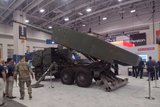
New counter-drone technologies, autonomous launchers and manufacturing modernisation initiatives highlighted emerging opportunities for defence suppliers, while the UK advanced a major military vehicle procurement programme.

Non-US companies are increasingly looking to establish subsidiary and partnerships to access the potential billions of dollars of vehicle and land systems contracts and there has already been some success.

Pearson Engineering has provided equipment and engineering expertise to the Armed Forces of Ukraine since the beginning of the full-scale Russian invasion in 2022. The British company is now working to deepen engagement with the Ukrainian defence industry, expanding its support for the country’s population and laying the foundations for future technological innovation.
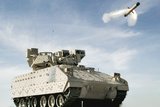
Rather than developing entirely new weapons, defence companies are looking to build on existing weapons and systems to deliver greater capability, control costs and accelerate fielding.

With a production rate of more than 10 million vehicles annually, the US commercial car and vehicle manufacturing base is second only to China. Defence companies are looking at how the vehicles, technology and manufacturing capability can support programmes.

Connect with us on socials


