Georgia requests Javelin missiles


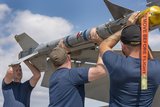
The US State Department has made a determination approving a potential foreign military sale of Javelin missiles and Command Launch Units (CLUs) to Georgia, the Defense Security Cooperation Agency announced on 20 November.
In the package worth up to $75 million, Georgia has requested 410 Javelin missiles and 72 Javelin CLUs. The request also includes ten Basic Skills Trainers, up to 70 simulated rounds, logistics and other programme support.
The Javelin is a shoulder-fired anti-armour weapon system that automatically guides itself to the target after launch. It uses an arched top-attack profile to climb above its target for improved visibility and then strikes where the armour is weakest. The system’s soft launch design enables Javelin to be safely fired from inside buildings or bunkers.
If the sale goes ahead, the prime contractor will be the Raytheon/Lockheed Martin Javelin Joint Venture.
Related Equipment in Defence Insight



More from Land Warfare
-
![British Army Land Rover replacement plan inches forward]()
British Army Land Rover replacement plan inches forward
The UK Ministry of Defence has proposed a selection date of May 2027 for the Land Rover replacement requirement, with deliveries expected through to 2036. Next month’s DVD exhibition will be a key shop window for bidders.
-
![Snow patrol and access all areas: the Arctic all-terrain vehicles market grows]()
Snow patrol and access all areas: the Arctic all-terrain vehicles market grows
The procurement and planned procurement of articulated tracked all-terrain vehicles is being driven by a need to replace older platforms and an acknowledgement of a capability gap for Arctic regions.
-
![Push strengthens for a second JLTV supplier]()
Push strengthens for a second JLTV supplier
A move, launched in May, could lead to a second supplier for the US Marines Corps’ Joint Light Tactical Vehicle requirement. Meanwhile, Wisconsin elected representatives have been pushing for necessary funding to be included in the FY27 budget.
-
![Canada reveals first requirements for future long-range air-to-air missile]()
Canada reveals first requirements for future long-range air-to-air missile
Exclusive: Ottawa says its future NORAD interceptor must be highly stealthy, resistant to jamming and capable of engaging threats at very long range, while leaving the competition open to domestic and international suppliers.