


From systems integrator to multi-domain solutions provider (video)
Philipp von Brandenstein, Head of Corporate Communications at Rheinmetall, explains how Eurosatory 2026 marked a new stage in the company's evolution.


This article is brought to you by Galvion.
In December 2022, Galvion, a world leader in integrated head systems and power and data management solutions, was awarded a framework contract by the NATO Support and Procurement Agency (NSPA) to supply its flagship Batlskin Caiman® ballistic helmet system.
This announcement places Galvion as a major supplier of higher performance helmet systems, typically used by Special Operations Forces (SOF) and dismounted light forces, to any NATO country wishing to purchase through NSPA.
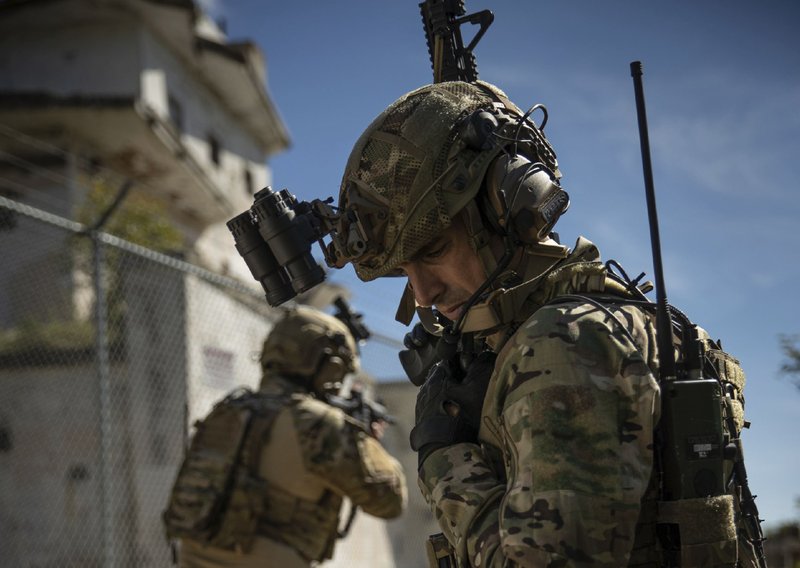
Galvion designs, develops, and delivers mission critical head, face, and torso survivability solutions as well as intelligent power and data management systems for the world’s most demanding military and tactical teams.
Over the past 21 years, the company’s products and technology have evolved beyond purely passive protection, focusing instead on integrated systems that enhance performance and survivability, with an eye to the ever-changing demands of the modern battlefield. Through advanced design, keen end-user insight and intelligent integration, Galvion engineers target solutions that reset users’ expectations of what we thought possible.
The NSPA contract was awarded following extensive user trials conducted by the lead user nation under the supervision of the NSPA. The contract duration is three years with options to be extended to a maximum of seven years.
Selected by NSPA to meet the higher performance bracket of four specified helmet categories, Galvion’s flagship Batlskin Caiman® helmet comes in five sizes and is equipped with the very latest APEX lining system, an intuitively adjustable design that enables a customized fit for users and is designed to offer class leading stability for the most modern night and visual augmentation devices.
The Caiman helmet is scalable for highly dynamic operations, with mission-specific accessories (visor, mandible, and helmet cover) also available through the framework contract. The helmet system has been tried and tested on operations and is already in service across multiple countries, primarily for SOF use.
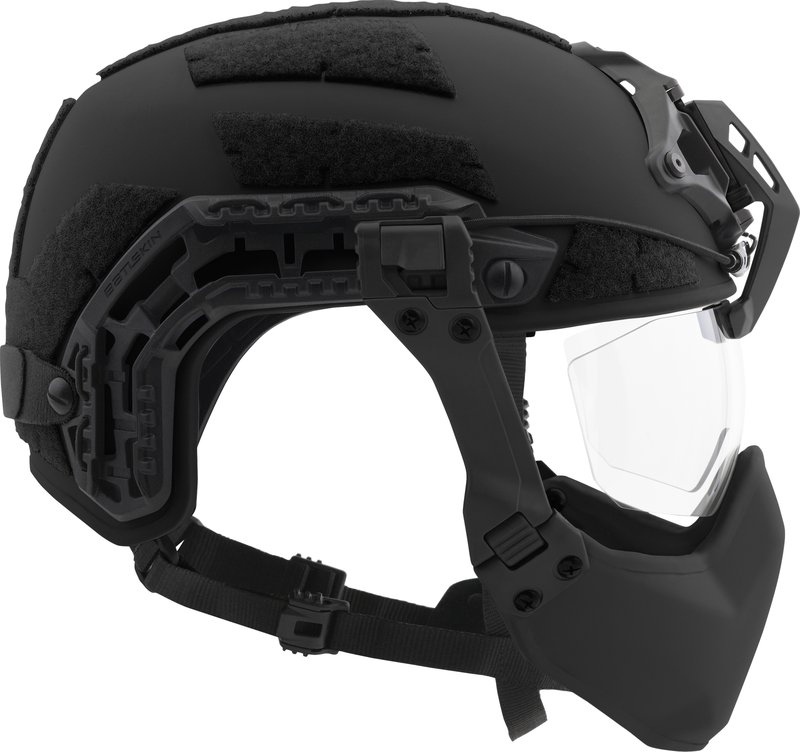
Delivering unmatched levels of weight and comfort, the Caiman platform is expressly designed to incorporate electronics, communications headsets, and other critical equipment needs, now and into the future.
Galvion is working with best-in-breed partners to develop and integrate capability enhancements, from scalable power to comms to strobes and visual displays, that will ensure the Caiman platform continues to evolve to meet mission needs.
NATO nations have the convenience of ordering Galvion’s Caiman helmet systems directly through the NPSA, bypassing the lengthy competition process. Additional information about Galvion’s steadily expanding portfolio of Caiman accessories will be forthcoming, all of which will be available through NSPA framework, to be purchased concurrently with the helmets or added later, offering flexibility for countries that have already procured helmets.


Philipp von Brandenstein, Head of Corporate Communications at Rheinmetall, explains how Eurosatory 2026 marked a new stage in the company's evolution.
BAE Systems’ all-digital EW delivers 360-degree threat awareness in contested environments, boosts survivability, and cuts lifecycle costs.

Small uncrewed aerial systems (UAS) have transformed the battlespace, posing a complex threat across all domains. Militaries now need counter-UAS (CUAS) capabilities that defeat the danger while meeting demands around readiness, manoeuvrability and adaptability, according to Mike Spina, Director, Global Sales and Business Development for Targeting and Sensor Systems (TSS) at L3Harris Technologies.

In Conversation… Ahmet Akyol, CEO of ASELSAN, talks to Shephard’s Gerrard Cowan about how the rapid evolution of uncrewed aerial systems (UAS) is transforming the battlespace, with militaries focused on both deploying these platforms to maximum effect and developing the defensive systems needed to counter them.
As the home of British helicopters, Leonardo has worked with the UK Ministry of Defence for over a decade to advance technologies underpinning uncrewed rotorcraft. Today, in partnership with UK Defence Innovation and the Royal Navy, Leonardo is spearheading the next step in that journey: from remotely piloted technologies to fully autonomous systems.

In Conversation… Armor Harris, Senior Vice President for Aircraft at Shield AI, talks to Shephard’s Gerrard Cowan about why cost-effective autonomous aircraft are a game-changer for air forces worldwide, and the key roles played by VTOL and AI as enabling technologies.

Connect with us on socials


