Future of Ajax remains cloudy
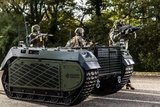
The UK MoD ordered 589 Ajax vehicles for the British Army. (Photo: GDUK)
While the UK MoD issued 20 recommendations in the Ajax health and safety report, Defence Procurement Minister Jeremy Quin claimed that it is impossible to be 100% confident that the programme will succeed.


Without defining a new timescale for the programme, the British MoD has released its ‘Ajax Noise and Vibration Review’ addressing health and safety issues with the vehicle. The document pointed out failings in the procurement process and stated 20 recommendations.
Defence Procurement Minister Jeremy Quin announced the publication of the report on 15 December in the House of Commons. He claimed that the future of Ajax is yet to be defined and added that he is ‘deeply concerned’ about its progress.
‘It remains impossible to share with this house 100% confidence that this programme will succeed or, if it does, the timing of
Our news & analysis is now part of Defence Insight®
A Basic-level or higher Defence Insight subscription is now required to view this content.


More from Land Warfare
-
![Trans-European iMUGS2 uncrewed systems programme set for three-day exercise in 2028]()
Trans-European iMUGS2 uncrewed systems programme set for three-day exercise in 2028
The next stage of the Integrated Modular Unmanned Ground System (iMUGS) programme, dubbed iMUGS2, was launched in November 2025. Three major demonstrations are planned before the end of 2028.
-
![How joint ventures are expanding Rheinmetall's munitions portfolio (video)]()
How joint ventures are expanding Rheinmetall's munitions portfolio (video)
Roman Köhne, CEO of Rheinmetall's Weapon and Ammunition Division, discusses the company's announcements at Eurosatory 2026, including developments in defence technology, precision systems, industrial partnerships and future capability programmes.
-
![Canada reveals first requirements for future long-range air-to-air missile]()
Canada reveals first requirements for future long-range air-to-air missile
Exclusive: Ottawa says its future NORAD interceptor must be highly stealthy, resistant to jamming and capable of engaging threats at very long range, while leaving the competition open to domestic and international suppliers.