French BVs10 ATVs to be fitted with Protector RWS


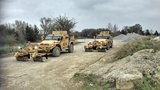
The BVs10 All-Terrain Vehicles being delivered to the French Armed Forces by BAE Systems Hägglunds will be equipped with the Kongsberg Protector Remote Weapon Station (RWS).
The Protector RWS, designed for small and medium calibre weapons, will bring increased protection for soldiers operating the BVs10 vehicles. Deliveries of the systems are expected to start in Q1 2014.
Espen Henriksen, president, Kongsberg Protech Systems, said: ‘Being the world’s largest producer of RWS, it is exciting to be integrated onto a new vehicle platform. France is an important market for us, and we look forward to strengthening our relationship with both of these customers.’
France ordered the BVs10 Mk II ATV in December 2009. The vehicles are being delivered in three variants - troop carrier, command post and logistic vehicle. France joined Dutch and British armed forces in ordering the BVs10; since then Sweden has also selected the vehicle.



More from Land Warfare
-
![NATO looks for answers to overcome standards hurdles and improve procurement]()
NATO looks for answers to overcome standards hurdles and improve procurement
NATO is looking to artificial intelligence to provide integration between different C2 systems to create a common operational picture, potentially offering a faster route to interoperability than the slow-moving processes of NATO standards committees.
-
![NATO FUSE exercise plays out real-world scenario in the face of eastern border risks]()
NATO FUSE exercise plays out real-world scenario in the face of eastern border risks
The large-scale exercise in Latvia was the culmination of three experimentation initiatives to see how platforms, weapons and systems could fit into the alliance’s Eastern Flank Deterrence Initiative. As well as forces, it brought together companies and equipment.
-
![Euronaval 2026: faster frigates, evolving contracts and drone motherships lead opening conference]()
Euronaval 2026: faster frigates, evolving contracts and drone motherships lead opening conference
Fast frigate deliveries to the Hellenic Navy, French pressure on suppliers over open architectures and calls for new classes of warship marked the start of the Paris show.
-
![Canada accelerates uncrewed aerial system procurement for NATO and Arctic forces]()
Canada accelerates uncrewed aerial system procurement for NATO and Arctic forces
Canada plans to acquire at least 120 uncrewed aerial systems through two competitions with combined funding ceilings of C$32 million.