First CV90 engineering vehicle delivered to Norway


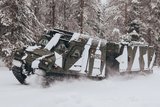
BAE Systems has delivered the first engineering variant of the CV90 family of vehicles to the Norwegian armed forces at the company’s Örnsköldsvik facility in Sweden.
Known as STING, the vehicle is the first of 16 engineering CV90 vehicles that will be delivered by BAE Systems under the June 2012 contract to upgrade and deliver a total of 144 CV90 vehicles to the Norwegian Army.
In addition to 16 engineering vehicles, BAE Systems will deliver 74 infantry fighting, 21 reconnaissance, 15 command, 16 multi-role and two driver training vehicles. The multi-role vehicles are designed to undertake different functions, including mortar carrier and logistics roles.
The first CV90 IFV, an infantry fighting variant, was delivered in February.
Col Ragnar Wennevik, programme manager, Norwegian Defence Logistics Organization Land Systems, said: ‘We have been working extremely closely with BAE Systems Hägglunds over the course of 26 months with this comprehensive contract. Over the past six months, BAE Systems has delivered two of the five planned variants of the Norwegian CV90 fleet in a timely manner.’
BAE Systems is working closely with Norwegian industry on the programme. One partner is Kongsberg Defence & Aerospace, which leads a team of Thales and Vinghøg. Another partner is Ritek AS from Levanger responsible for production of the engineering vehicle.
Related Equipment in Defence Insight

More from Land Warfare
-
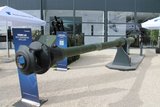
![Rheinmetall advances longer 155mm ordnance with 30% range increase]()
Rheinmetall advances longer 155mm ordnance with 30% range increase
Rheinmetall has begun initial firing trials of a new 155mm/60-calibre artillery ordnance that could deliver up to 30% greater range than its existing 155mm/52-calibre system, as production of the current gun expands across Germany and the UK.
-
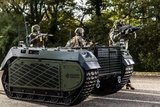
![Trans-European iMUGS2 uncrewed systems programme set for three-day exercise in 2028]()
Trans-European iMUGS2 uncrewed systems programme set for three-day exercise in 2028
The next stage of the Integrated Modular Unmanned Ground System (iMUGS) programme, dubbed iMUGS2, was launched in November 2025. Three major demonstrations are planned before the end of 2028.
-
![How joint ventures are expanding Rheinmetall's munitions portfolio (video)]()
How joint ventures are expanding Rheinmetall's munitions portfolio (video)
Roman Köhne, CEO of Rheinmetall's Weapon and Ammunition Division, discusses the company's announcements at Eurosatory 2026, including developments in defence technology, precision systems, industrial partnerships and future capability programmes.