FICV: And then there were eight


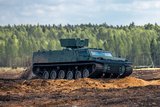
India’s Future Infantry Combat Vehicle (FICV) programme has moved a step closer to the starting blocks with industry putting forward an expression of interest (EoI).
The US$10 billion Future Infantry Combat Vehicle programme has attracted formal EoIs from eight of the initial ten vendors.
Shephard has learned that Rolta and Punj Lloyd have decided not to submit proposals.
The government-owned Ordnance Factory Board (OFB) has already been down-selected as one manufacturer and the MoD will provide 80% of prototype development costs for two other vendors that will be shortlisted by year’s end.
Bets are on Tata Motors to be a frontrunner with
Our news & analysis is now part of Defence Insight®
A Basic-level or higher Defence Insight subscription is now required to view this content.



More from Land Warfare
-
![Savox launches MissionCore battlefield integration platform]()
Savox launches MissionCore battlefield integration platform
Savox Communications has unveiled MissionCore, a modular C4ISR platform designed to integrate voice, video and sensor data across existing military networks.
-
![Eurosatory 2026: RWS launches urban counter-drone ammunition range]()
Eurosatory 2026: RWS launches urban counter-drone ammunition range
RWS has introduced its Urban Drone Defence ammunition family at Eurosatory 2026, offering a kinetic counter-UAS solution designed for use in urban environments.
-
![SYSNAV unveils GPS-independent soldier tracking system]()
SYSNAV unveils GPS-independent soldier tracking system
SYSNAV has launched its LocIndoor Blue Force Tracking solution at Eurosatory 2026, providing dismounted troops with positioning capabilities in GPS-denied environments.
-
![Eurosatory 2026: Vegvisir sets connectivity in contested environments in its sights]()
Eurosatory 2026: Vegvisir sets connectivity in contested environments in its sights
Maintaining connectivity in contested environments, where essential networks can easily be disrupted by enemy forces, has emerged as a key challenge in modern warfare. Estonian company Vegvisir aims to tackle that problem with a new Communications Module unveiled at Eurosatory.
-
![Eurosatory 2026: AM General highlights UGV and JLTV A2]()
Eurosatory 2026: AM General highlights UGV and JLTV A2
AM General is showcasing its autonomous ground vehicle and latest light tactical vehicle at Eurosatory 2026, highlighting counter-drone capabilities, modular mission systems and improvements in battlefield mobility.